gpshirplanet
New Born Pup
- Joined
- Jan 6, 2020
- Messages
- 25
- Reaction score
- 75
- Points
- 170

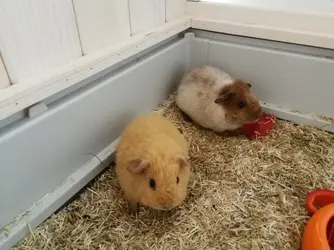
Hey there! My two Rex babies! A castrated boy (in Germany, they do early castration) and a girl.


3 weeks or 250g I thinkThey’re adorable, Peppa is so cute and precious! Just a head up that castrated boys need to be kept separate from girls for about six weeks after the operation as they can still get females pregnant in this time. I’m not sure at how many weeks old boys are able to get sows pregnant to start with so you may be alright, pregnancy and castration isn’t something I’ve ever experienced myself

Is that separation from mum or separation period from any female after castration?3 weeks or 250g I think
That’s when boars can get sows pregnantIs that separation from mum or separation period from any female after castration?
I'm not sure how that would work tbhIf they’re castrated early is there a need to separate from the female? I assume they did it before he was 3 weeks?
Right, but boys can get females pregnant at weighing 250 grams or 3 weeks old, if he was just castrated at 4 weeks, he can still get her pregnant until after the 6 week period. Was he castrated at 3 weeks or 4 weeks old, or before, and how much did he weigh at that time?In Germany, they practice "Frühkastration" which means early castration.


They’re adorable, Peppa is so cute and precious! Just a head up that castrated boys need to be kept separate from girls for about six weeks after the operation as they can still get females pregnant in this time. I’m not sure at how many weeks old boys are able to get sows pregnant to start with so you may be alright, pregnancy and castration isn’t something I’ve ever experienced myself
That’s good to know, it also makes a lot of sense too. It definitely shouldn’t be frowned upon if it helps the boys out!Hi and welcome!
You have two very cute little teddies! <3
Baby castration (i.e. castration at 200-250g before the semen goes live) has been a common practice in German speaking countries since the 80ies. It means that there is no post-op safety wait required and any baby boar can return to their family straight away and never be separated from them. The success rate is very high because babies heal so very quickly.
It also means that cross gender pairs are a lot more common (including between siblings) and that baby boar pairs actually don't have the usual teenage clashes and are as stable as sows - with the added bonus that unlike sows, they mellow with age...
In Switzerland, for instance, pet shops and breeders are only allowed to sell castrated baby boars to private homes in order to prevent any uncontrolled breeding as much as possible.
This practice is sadly mostly unknown or frowned upon in English speaking countries although it is much kinder on the social needs especially of young boars, which have all too often got a very raw deal in English speaking countries!
For more information please see the chapter on neutering ages in our neutering guide: Complete Syringe Feeding Guide
That’s good to know, it also makes a lot of sense too. It definitely shouldn’t be frowned upon if it helps the boys out!


 ❤
❤


That's a very sensible thing to doHi and welcome!
You have two very cute little teddies! <3
Baby castration (i.e. castration at 200-250g before the semen goes live) has been a common practice in German speaking countries since the 80ies. It means that there is no post-op safety wait required and any baby boar can return to their family straight away and never be separated from them. The success rate is very high because babies heal so very quickly.
It also means that cross gender pairs are a lot more common (including between siblings) and that baby boar pairs actually don't have the usual teenage clashes and are as stable as sows - with the added bonus that unlike sows, they mellow with age...
In Switzerland, for instance, pet shops and breeders are only allowed to sell castrated baby boars to private homes in order to prevent any uncontrolled breeding as much as possible. All premises are strictly controlled and can be prosecuted/closed down if found in breach of regulations.
This practice is sadly mostly unknown or frowned upon in English speaking countries although it is much kinder on the social needs especially of young boars, which have all too often got a very raw deal in English speaking countries!
For more information please see the chapter on neutering ages in our neutering guide: Neutered / De-sexed Boars And Neutering Operations: Myths, Facts and Post-op Care


