• Discussions taking place within this forum are intended for the purpose of assisting you in discussing options with your vet. Any other use of advice given here is done so at your risk, is solely your responsibility and not that of this forum or its owner. Before posting it is your responsibility you abide by this Statement

Cloudy eye

Hope all goes well at the vets tomorrow.
It is worrying when you’re dealing with something like this.

Sorry @Betsy - I missed the post about Christian. How’s he doing now?
His eye is looking a lot better but he had a corneal ulcer as well as a tear in it so he had Isathal and corneal repair gel (£70 odd pounds later ....) he is back tomorrow for a check up.
 
That's is what he is on but he only has them 4 times maybe he needs more! 6-8 times a day is alot! My mum is a nurse and said he's on the same stuff people get but they sometimes have it every half and hour!

Yes it is an eye drop that humans can have too. It’s antibiotic eye drop.Oh I’m unsure them as my vet always tells me to give it 6 to 8 times a day, mainly 8
 
His eye is looking a lot better but he had a corneal ulcer as well as a tear in it so he had Isathal and corneal repair gel (£70 odd pounds later ....) he is back tomorrow for a check up.
Ouch - poor Christian.
Just as your vet fund was getting better it gets clobbered again.
Hope tomorrow’s visit goes well
 
Aww you're doing well, as the others have said hay pokes are quite common, one of my current girls Orca is always getting hay pokes & has calcium deposits in her eyes anyway. Costs me a fortune in drops!

One of my previous guineas had a hay poke, I took her to the vets & had drops. The next day it was worse so I took her back & we discovered she had one of those dangly grass seeds had got wrapped round against her eyeball under the eyelid out of sight, it was continuously rubbing & scratching her eyeball.
Between the vet & I we got the seed out & the eye was very cloudy/ulcerated.
I put in drops for about 10 days & it healed up wonderfully :)
She had a tiny little scar there but you wouldn't notice it unless you knew it was there :)

As far as your work colleagues go... Do as Kelly said - tell them you have a medical appointment... Its not lying is it ;)

As far as asking about costs, tell the ones that smoke or drink, it's a couple of packets of ciggies or a few pints that you're spending... I find it usually shuts people up! :))
Not that it's any of their business anyway!

Healing vibes being sent your way luv the girls & I. Xx
 
We have been back for our check up. We saw another vet as the original one was off. I'm very confused now and upset.
Harolds damage has healed so we can stop the drops. But he is blind in that eye now and the vet could not see through it.
His other eye is clouding over so this is an issue other than damage.
I have to take a urine sample (not sure how yet) to check for diabetes. The vet does not know what next as she has no knowledge of this and how it can be treated. There is a chance it's not but he does drink alot and that is a sign apparently.
I'm not sure if I even want to ask if anyone has had experience of this i don't think I could take the upset at the moment. So this is our update and I will try and get my self together and think of a plan.
 
Could it be cataracts? Betsy has them forming and the gorgeous floofly Rainbow piggie Merab @Merab's Slave had cataracts. Piggies get on OK with cataracts after a period of adjustment. I now tend to put food down under Betsy's nose so she can find it.
 
She said it is a cataract. I am hoping this is the case and only this. I have just had a moment with myself and googled it and read on the guinelynx site that they can be managed with diabetes. He does drink alot and these have formed quickly so he has two of the symptoms.
 
My late Emma had developed cataracts in both her eyes at just 3 years old. She lived a perfectly happy life with them even managing the ramp in their cage until she reached old age where she preferred to just potter around the bottom cage.

My Ellen was diagnosed with diabetes at 6 months old. She was losing weight instead of gaining it, drinking more water than the others and had high levels of glucose in her urine. My vet did a simple blood test by cutting her nail too short. Horrible but better than a full blood test. This showed high glucose levels in her blood so with that and her other symtoms, diabetes was diagnosed. All we did was change her diet removing all fruits and all veg high in sugar / carbohydrate and feeding few pellets and plenty of hay (which we did anyway) and within a month, the diabetic symptoms stopped including the glucose in her urine and she was in remission. She's now nearly 4 years old, yes, my piggies diet is boring compared to some and we have to be careful with what she eats but working with my vet and careful monoriting, she lives a happy healthy life.

If there is glucose in the urine, don't let your vet diagnose diabetes by that only. A blood test will need to be performed to check the blood sugar. My Edward has had glucose in his urine samples before and other times it's been clear which my vet says can happen in guinea pigs.

As for collecting a sample, you use a clean plastic container. I use a washing up bowl that I use just for piggy urine samples. I place piggy in the in the bowl and then just wait for them to wee. When they've done it, you suck the urine up in to a clean syringe, place in the fridge and take to the vets as soon as possible.

But cataracts and diabetes really isn't the end of the world :)
 
But cataracts and diabetes really isn't the end of the world :)
Thank you for the reassurance I will try and get a urine sample today I'm letting him have a sleep after our trip out. I will also speak to my vet about the nail trick for getting blood. I sometimes feel like not all vets in our practice are very knowledgeable about guineas.
 
Thank you for the reassurance I will try and get a urine sample today I'm letting him have a sleep after our trip out. I will also speak to my vet about the nail trick for getting blood. I sometimes feel like not all vets in our practice are very knowledgeable about guineas.

Some vets prefer to use a pin prick behind the ear to get a blood sample but my vet prefers to do it this way. I also know that Simon Maddock at the Cat and Rabbit clinic also uses the same method. My vet isn't an exotic specialist but she uses one when she isn't sure about something and contacted one when Ellen was first diagnosed as she had never dealt with a diabetic pig before, only rabbits. Try not to read up online too much about diabetes in piggies, I did that and scared myself to death! Please feel free to ask me anymore questions if you're concerned about something and I will try my best to answer :)
 
Thank you for the reassurance I will try and get a urine sample today I'm letting him have a sleep after our trip out. I will also speak to my vet about the nail trick for getting blood. I sometimes feel like not all vets in our practice are very knowledgeable about guineas.

I'm not sure where you are in Lancashire but have you looked at our recommended Vets to see if there is a more specialist cavy savvy vet within distance of where you live? Recommended Guinea Pig Vets
 
Thank you for the reassurance I will try and get a urine sample today I'm letting him have a sleep after our trip out. I will also speak to my vet about the nail trick for getting blood. I sometimes feel like not all vets in our practice are very knowledgeable about guineas.

I've had a dedicated cataract group at some point and have currently got 2 piggies with congenital and several piggies with old age cataracts. Sight is the weakest of the guinea pig senses (other than humans where it is the strongest sense) and they adapt well to the loss once the other senses have compensated. Blind piggies can lead a normal life without you noticing any different. While shallow ramps with good grip and a scent retaining material like a carpet offcut are OK, steep hutch ramps are too dangerous. ;)
Here is a video of 7 year old arthritic Mali happily waddle-zooming around the roaming floor following her scent spoor despite having lost all sight apart from a little light and dark just as an illustration that cataract piggies don't lose quality of life.

There has been a fad for diabetes about 5-6 years ago when it became common knowledge that guinea pigs could get diabetes. However a lot of the diagnoses were those where a naturally high glucosamine level in guinea pig blood was mistaken for diabetes.
Real diabetes is comparatively rare and so is the link between cataracts and diabetes. In fact, we haven't seen any case of it in several years - and with well over 10,000 enquiries in our H/I every year, you can get a bit of an idea just how rare it actually is. ;)
Mild diabetes can usually be got under control and into remission in a matter of months without any medication needed.
 
I've had a dedicated cataract group at some point and have currently got 2 piggies with congenital and several piggies with old age cataracts. Sight is the weakest of the guinea pig senses (other than humans where it is the strongest sense) and they adapt well to the loss once the other senses have compensated. Blind piggies can lead a normal life without you noticing any different. While shallow ramps with good grip and a scent retaining material like a carpet offcut are OK, steep hutch ramps are too dangerous. ;)
Here is a video of 7 year old arthritic Mali happily waddle-zooming around the roaming floor following her scent spoor despite having lost all sight apart from a little light and dark just as an illustration that cataract piggies don't lose quality of life.

There has been a fad for diabetes about 5-6 years ago when it became common knowledge that guinea pigs could get diabetes. However a lot of the diagnoses were those where a naturally high glucosamine level in guinea pig blood was mistaken for diabetes.
Real diabetes is comparatively rare and so is the link between cataracts and diabetes. In fact, we haven't seen any case of it in several years - and with well over 10,000 enquiries in our H/I every year, you can get a bit of an idea just how rare it actually is. ;)
Mild diabetes can usually be got under control and into remission in a matter of months without any medication needed.

When Ellen was first diagnosed , I had people (not veterinary professionals) telling me that she would need insulin injecting everyday for the rest of her life and that her life would be poor :( I questioned my vet who told me that wasn’t true except in very rare circumstances. But then she does always tell me off for googling stuff :D
 
As @Betsy mentioned my beautiful Merab had cataracts for the last years of her life and she coped perfectly well.
She spent a lot more time with her head held high to listen, but she never missed out on food. She was slower when out playing but she was also older then.
Guinea pigs depend less on sight than we do so blindness isn’t such a big deal - their other senses compensate
 

Attachments

  • 8F35E4DA-6187-49A9-B8A1-6D43A7EE8D24.webp
    8F35E4DA-6187-49A9-B8A1-6D43A7EE8D24.webp
    57.1 KB · Views: 0
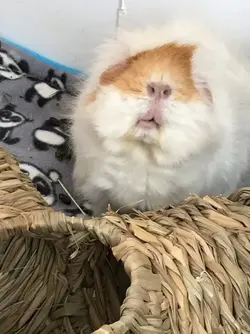
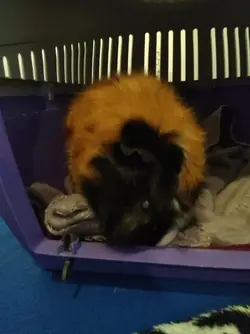
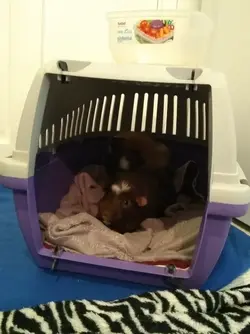
Thank you all for your amazing support and advice. Both boys are playing out and Harold is making sure he's found any travel food they might have missed. He seems happy enough and is being a pest to Bruno and he keeps humping him when he trys to get in the box with him.
 

Attachments

  • IMG_20181119_161918.webp
    IMG_20181119_161918.webp
    39.4 KB · Views: 0
  • IMG_20181119_161927.webp
    IMG_20181119_161927.webp
    37.4 KB · Views: 1
  • IMG_20181119_161954.webp
    IMG_20181119_161954.webp
    25.4 KB · Views: 1
  • IMG_20181119_163118.webp
    IMG_20181119_163118.webp
    36.7 KB · Views: 1
Back
Top