• Discussions taking place within this forum are intended for the purpose of assisting you in discussing options with your vet. Any other use of advice given here is done so at your risk, is solely your responsibility and not that of this forum or its owner. Before posting it is your responsibility you abide by this Statement

Fungal, Mites Or Something Else?

Omeredith

Junior Guinea Pig
Joined
Mar 22, 2019
Messages
5
Reaction score
0
Points
50
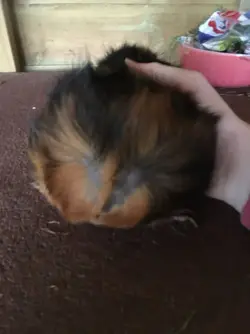
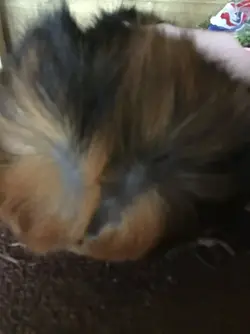
Hello! My Guinea pig Betty has had a bald patch since the end of January, it hasn't got any worse or better. She's not scratching it, no blood or rough skin, just bald. As well as this there is also a small area on the side which in the last few days has got a tiny bit worse. I treated her early February with spot on and again early March. I have just ordered some anti fungal spray. It doesn't seem anything major or causing her any harm. There are a few tiny hairs on part of the bald patch. Thanks for your help! Ps- the vets aren't very experienced with Guinea pigs! 109393
 
Mites are the most common reason for hair loss and don't always result in scratching or other obvious signs. Is spot on Ivermectin? You can treat with this or ask your vet to, and it shouldn't harm your Guinea if she doesn't have mites. If that doesn't do it your vet could swab the area to check for fungal/bacterial infection. Is the bald patch only on one side? If it's symmetrical on the body it could be hormonal.
 
Mites are the most common reason for hair loss and don't always result in scratching or other obvious signs. Is spot on Ivermectin? You can treat with this or ask your vet to, and it shouldn't harm your Guinea if she doesn't have mites. If that doesn't do it your vet could swab the area to check for fungal/bacterial infection. Is the bald patch only on one side? If it's symmetrical on the body it could be hormonal.
It's just above her bum at her back (as seen in photo) and a small patch on side.
 
Mites are the most common reason for hair loss and don't always result in scratching or other obvious signs. Is spot on Ivermectin? You can treat with this or ask your vet to, and it shouldn't harm your Guinea if she doesn't have mites. If that doesn't do it your vet could swab the area to check for fungal/bacterial infection. Is the bald patch only on one side? If it's symmetrical on the body it could be hormonal.
What would it mean if it was hormonal? Is it easily treatable?
 
It's hard to see exactly from the photo, but it looks a little symmetrical. If it's right in the middle of her back and what you call bilaterally symmetrical (with her spine as the line marking the middle) then there's a high chance it could be a hormonal thing. Assuming there's no chance of pregnancy you might want to think about ovarian cysts. I've mostly had boys so maybe someone with more experience in that area could advise you. There are other hormone related causes for hair loss but telling which it might be is a job for the vet. Maybe your vet could track down an exotic vet for advice, or it might be worth travelling a bit further to find one.
 
Sorry can't be of more help, not had a massive amount of experience with this, but I'm sure plenty of others will be able to tell you what their piggies were treated with. Still could just be mites though!
 
My Guinea pigs have mites, I don't feel confident in giving them a bath, so does Insectcidal spray work?
Any other suggestions? Thanks.
 
(Edit) I thought you meant incisectcidal spray to get rid of flies etc, now assuming you mean the ones from pet shop.

No, they do nothing. Invermectin is the only correct treatment for mites.

Mites cannot be solved with baths. They need to go to a vet who will give them invermectin in the right dosage and check whether it actually is mites as fugal infections can look very similar.
 
We can’t diagnose from photos. Please have her seen by a vet for formal diagnosis and the correct treatment. Home treating on spec is rarely successful as you may be giving the wrong treatment or in the wrong dose.
 
I have merged your threads. Please can you keep to one thread on this subject as it makes it easier for staff to monitor and to ensure consistency in responses.
As stated above you need to see a vet for formal diagnosis and prescription of the correct treatment at correct strength.
 
Back
Top