• Discussions taking place within this forum are intended for the purpose of assisting you in discussing options with your vet. Any other use of advice given here is done so at your risk, is solely your responsibility and not that of this forum or its owner. Before posting it is your responsibility you abide by this Statement

🐹 Mia’s Sudden GI Stasis – Timeline + Vet Visit + Recovery (Need Help Identifying Possible Cause)

MartiDavi

Junior Guinea Pig
Joined
Aug 18, 2018
Messages
199
Reaction score
510
Points
420
Location
Birmingham, UK
Hi everyone,
I wanted to share what’s happened with my 2.5-year-old female guinea pig, Mia (Romeo’s daughter), over the last couple of days in case anyone has insights into what might have triggered her sudden bout of stasis. We’ve seen the vet and are on the road to recovery, but I’d love to figure out the root cause so I can prevent this from happening again.

āš ļø Timeline of Events

šŸ•– Wednesday, 23 July – Around 7 PM
  • I noticed Mia wasn’t acting like herself: withdrawn, quiet, and hiding. She didn’t come to greet me or interact with her sisters.
  • She would only eat lettuce if I placed it directly in front of her, not from the bowl.
  • She was still nibbling on hay a bit, but not moving around.

šŸŒ™ Overnight (23–24 July)

  • No sign of normal poop at all — just 3 or 4 tiny droplet-like poops (like micro pellets).
  • No visible bloating or signs of pain when gently touched, though she’s always been sensitive to belly handling.
  • I started syringe feeding Critical Care every 2–3 hours.
  • She remained withdrawn but would accept food when placed in front of her. She was drinking a bit less than usual.

šŸŒ… Thursday Morning, 24 July

  • Still no proper poops by morning.
  • She became a little more active, started nibbling hay and walked around briefly.
  • Finally passed a few small, long-ish poops — some had a narrow bottlenecked end.
  • Pee was normal, clear in colour, no discharge or odd smell.
  • Continued Critical Care, around 15ml in total by this point.

🩺 Vet Visit – Thursday 24 July, Late Morning
  • Vet examined her and expressed some tiny droplet poops manually.
  • No weight loss.
  • Pee was checked under microscope — all normal.
  • We did an x-ray, which showed no signs of gas buildup, no bladder stones, no blockages, no issues with lungs or teeth.
  • He suspects GI stasis caused by pain or illness, but couldn’t pinpoint a clear cause.

We were sent home with:
  • Metacam (0.04ml twice daily for pain)
  • Renitidine (Zantac/Ranitidine) (0.3ml twice daily to support gut motility)
  • Instructions to keep feeding Critical Care until her eating and poop returns fully to normal

šŸ“Current Status – Thursday Evening, 24 Jul
  • After the vet visit, she took 15ml of Critical Care willingly.
  • She is now eating hay and veggies more consistently on her own, and she drank water unaided.
  • Still not eating as much hay as normal, and hasn’t touched pellets yet.
  • Poops are slowly becoming more normal in shape — a bit longer, less dry, though not quite back to her usual output or volume.
  • She’s more active and alert, not hunched anymore, and her fur looks normal again.
  • Next visit unless something happens will be on Thursday afternoon.

ā“My Questions:
  • Has anyone had a similar case where there was no clear trigger for the stasis?
  • Could this have been caused by hormonal issues (ovarian cysts?), even tho when the vet examined her could not feel anything odd.
  • She was treated for a possible UTI a week ago, but seemed fully recovered.
  • Should I consider further tests if this happens again (like ultrasound or dental exam under sedation - which is scary!).
Thanks so much if you’ve read this far. I’m just trying to learn from this so I can do even better next time. She seems to be improving, but this really shook me and I want to be sure I don’t miss something. šŸ’š


Happy to answer any questions — I’m tracking her closely with food/poop logs now.
 
Hi everyone,
I wanted to share what’s happened with my 2.5-year-old female guinea pig, Mia (Romeo’s daughter), over the last couple of days in case anyone has insights into what might have triggered her sudden bout of stasis. We’ve seen the vet and are on the road to recovery, but I’d love to figure out the root cause so I can prevent this from happening again.

āš ļø Timeline of Events

šŸ•– Wednesday, 23 July – Around 7 PM
  • I noticed Mia wasn’t acting like herself: withdrawn, quiet, and hiding. She didn’t come to greet me or interact with her sisters.
  • She would only eat lettuce if I placed it directly in front of her, not from the bowl.
  • She was still nibbling on hay a bit, but not moving around.

šŸŒ™ Overnight (23–24 July)

  • No sign of normal poop at all — just 3 or 4 tiny droplet-like poops (like micro pellets).
  • No visible bloating or signs of pain when gently touched, though she’s always been sensitive to belly handling.
  • I started syringe feeding Critical Care every 2–3 hours.
  • She remained withdrawn but would accept food when placed in front of her. She was drinking a bit less than usual.

šŸŒ… Thursday Morning, 24 July

  • Still no proper poops by morning.
  • She became a little more active, started nibbling hay and walked around briefly.
  • Finally passed a few small, long-ish poops — some had a narrow bottlenecked end.
  • Pee was normal, clear in colour, no discharge or odd smell.
  • Continued Critical Care, around 15ml in total by this point.

🩺 Vet Visit – Thursday 24 July, Late Morning
  • Vet examined her and expressed some tiny droplet poops manually.
  • No weight loss.
  • Pee was checked under microscope — all normal.
  • We did an x-ray, which showed no signs of gas buildup, no bladder stones, no blockages, no issues with lungs or teeth.
  • He suspects GI stasis caused by pain or illness, but couldn’t pinpoint a clear cause.

We were sent home with:
  • Metacam (0.04ml twice daily for pain)
  • Renitidine (Zantac/Ranitidine) (0.3ml twice daily to support gut motility)
  • Instructions to keep feeding Critical Care until her eating and poop returns fully to normal

šŸ“Current Status – Thursday Evening, 24 Jul
  • After the vet visit, she took 15ml of Critical Care willingly.
  • She is now eating hay and veggies more consistently on her own, and she drank water unaided.
  • Still not eating as much hay as normal, and hasn’t touched pellets yet.
  • Poops are slowly becoming more normal in shape — a bit longer, less dry, though not quite back to her usual output or volume.
  • She’s more active and alert, not hunched anymore, and her fur looks normal again.
  • Next visit unless something happens will be on Thursday afternoon.

ā“My Questions:
  • Has anyone had a similar case where there was no clear trigger for the stasis?
  • Could this have been caused by hormonal issues (ovarian cysts?), even tho when the vet examined her could not feel anything odd.
  • She was treated for a possible UTI a week ago, but seemed fully recovered.
  • Should I consider further tests if this happens again (like ultrasound or dental exam under sedation - which is scary!).
Thanks so much if you’ve read this far. I’m just trying to learn from this so I can do even better next time. She seems to be improving, but this really shook me and I want to be sure I don’t miss something. šŸ’š


Happy to answer any questions — I’m tracking her closely with food/poop logs now.

Hi

HUGS

Total GI stasis (i.e. sudden stopping of the whole gut with no sound of any gut activity at all - 'silent gut') usually happens out of the blue but with a little luck it reverses in many cases within a couple of days and won't make a comeback. It can be fatal in other cases, though - especially after a heat stroke for instance.

The problem is that these days bloating issues are also lumped under GI stasis even though technically they are generally just a partial stasis event (i.e. only a part of the gut stops working) with the gut gassing up. It can unfortunately lead to confusion.

This guide here may help you: Digestive Disorders: Not Eating - Diarrhea - Bloat - GI Stasis (No Gut Movement)

All the best for a full recovery.
 
Hi

HUGS

Total GI stasis (i.e. sudden stopping of the whole gut with no sound of any gut activity at all - 'silent gut') usually happens out of the blue but with a little luck it reverses in many cases within a couple of days and won't make a comeback. It can be fatal in other cases, though - especially after a heat stroke for instance.

The problem is that these days bloating issues are also lumped under GI stasis even though technically it they are generally just a partial stasis event (i.e. only a part of the gut stops working) with the gut gassing up. It can unfortunately lead to confusion.

This guide here may help you: Digestive Disorders: Not Eating - Diarrhea - Bloat - GI Stasis (No Gut Movement)

All the best for a full recovery.
Thanks for the hugs, we needed them! 😭

Davide and I were religiously reading your posts last night, it really helped us making sure Mia was making it until we saw the vet. I booked another day off tomorrow so I can keep checking in her. Thanks for sharing the guide I will have another read tonight šŸ’•
 
Thanks for the hugs, we needed them! 😭

Davide and I were religiously reading your posts last night, it really helped us making sure Mia was making it until we saw the vet. I booked another day off tomorrow so I can keep checking in her. Thanks for sharing the guide I will have another read tonight šŸ’•

All the best for Mia. I am glad that our forum guides are helping to save lives and keep frantic owners going. I hope that Mia is making a quick recovery. The full stasis event fits her symptoms best. It's always a mystery - as well as a massive shock - as to why it happens.
 
Morning everyone! I’m happy to report that Mia is doing much better!

After the vet visit and starting on Metacam and Renitidine, she perked up noticeably. By last night, she was eating more on her own, moving around during floor time, and even drank water without prompting. This morning, she took her meds and a reduced amount of Critical Care without any fuss, and she’s been running around like her usual self.

She’s now eating hay, pellets, and veggies (reduced amount) on her own, which is a huge relief. We’ve also seen the return of more normal-looking poops, though I’m still monitoring size and frequency. Her overall activity, posture, and behaviour all seem back to normal too.

I’m keeping a daily log and will follow up with the vet on Thursday to make sure we rule out any potential underlying causes, just in case this was more than a one-off stasis episode.

Thanks again — this forum gave me so much reassurance when I needed it most. ā¤ļø I’ll keep you posted!
 
Morning everyone! I’m happy to report that Mia is doing much better!

After the vet visit and starting on Metacam and Renitidine, she perked up noticeably. By last night, she was eating more on her own, moving around during floor time, and even drank water without prompting. This morning, she took her meds and a reduced amount of Critical Care without any fuss, and she’s been running around like her usual self.

She’s now eating hay, pellets, and veggies (reduced amount) on her own, which is a huge relief. We’ve also seen the return of more normal-looking poops, though I’m still monitoring size and frequency. Her overall activity, posture, and behaviour all seem back to normal too.

I’m keeping a daily log and will follow up with the vet on Thursday to make sure we rule out any potential underlying causes, just in case this was more than a one-off stasis episode.

Thanks again — this forum gave me so much reassurance when I needed it most. ā¤ļø I’ll keep you posted!

All the best for Mia.

I sincerely hope that it was just a mystery one-off scare.
Have you been weighing her first thing in the morning? The poo output is always running a day or two behind events because that is the time it usually takes for any food to pass the digestive tract.
This newish guide of mine explains the different monitoring methods and how to put weight loss in the individually correct perspective as guinea pig weights and sizes vary massively.
Weight and Weight Loss Explained: BMI, Weighing, Poos and Feeding Support
 
All the best for Mia.

I sincerely that it was just a mystery one-off scare.
Have you been weighing her first thing in the morning? The poo output is always running a day or two behind events because that is the time it usually takes for any food to pass the digestive tract.
This newish guide of mine explains the different monitoring methods and how to put weight loss in the individually correct perspective as guinea pig weights and sizes vary massively.
Weight and Weight Loss Explained: BMI, Weighing, Poos and Feeding Support
Hello! Thanks for sharing the guide, I will have a look now. I usually weight the piggy in the evening but out if curiosity I weighed earlier and she seems on the right mark. I look into the guidance now to see what variations I might expect.

Mia is still doing very well, they normally less active this time of the day, but I poked a little and she is out and about as her usual self. Still eating hay and pellets on her own.

My new probiotic just arrived so I might add those into her diet for a few days!

P.S.
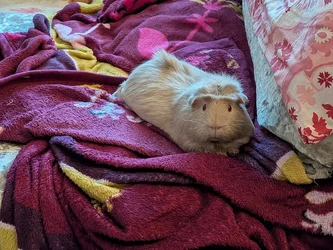
Mia says ciao!
1753438058678.webp
 
Hello! Thanks for sharing the guide, I will have a look now. I usually weight the piggy in the evening but out if curiosity I weighed earlier and she seems on the right mark. I look into the guidance now to see what variations I might expect.

Mia is still doing very well, they normally less active this time of the day, but I poked a little and she is out and about as her usual self. Still eating hay and pellets on her own.

My new probiotic just arrived so I might add those into her diet for a few days!

P.S.
Mia says ciao!
View attachment 273203

If she has a healthy companion not on antibiotics then you may want to consider poo soup (i.e. live microbiome transfer). If made correctly with absolutely freshly dropped poos it is more effective than probiotic powders although you can give those additionally. It also mirrors natural behaviour in recovering guinea pigs ('poo digging', i.e. trying to snatch the freshest poos coming out from a healthy companion right at the source).

To make poo soup, take the companion out of the cage and let them nose through some fresh dog pee-free grass or their favourite treat, you will have some totally fresh poos within minutes. Soak 3-5 poos in a little water in a small dish shortly and syringe 3 ml of the water latest when it starts to turn brown. This ensures that as much live microbiome as possible has a chance to reach the gut. Do it 2-3 times daily.
 
If she has a healthy companion not on antibiotics then you may want to consider poo soup (i.e. live microbiome transfer). If made correctly with absolutely freshly dropped poos it is more effective than probiotic powders although you can give those additionally. It also mirrors natural behaviour in recovering guinea pigs ('poo digging', i.e. trying to snatch the freshed poos coming out from a healthy companion right at the source).

To make poo soup, take the companion out and let them nose through some fresh dog pee-free grass or their favourite treat, you will have some totally fresh poos within minutes. Soak 3-5 poos in a little water in a small dish shortly and syringe 3 ml of the water latest when it starts to turn brown. This ensures that as much live microbiome as possible has a chance to reach the gut. Do it 2-3 times daily.
Thabk you! I remember reading about this method in one of your guides and I was going to look for it. This saves me time! She does have 2 sisters and as far as we know rhey are both healthy right now! šŸ˜
 
If she has a healthy companion not on antibiotics then you may want to consider poo soup (i.e. live microbiome transfer). If made correctly with absolutely freshly dropped poos it is more effective than probiotic powders although you can give those additionally. It also mirrors natural behaviour in recovering guinea pigs ('poo digging', i.e. trying to snatch the freshest poos coming out from a healthy companion right at the source).

To make poo soup, take the companion out of the cage and let them nose through some fresh dog pee-free grass or their favourite treat, you will have some totally fresh poos within minutes. Soak 3-5 poos in a little water in a small dish shortly and syringe 3 ml of the water latest when it starts to turn brown. This ensures that as much live microbiome as possible has a chance to reach the gut. Do it 2-3 times daily.

You can find all forum guides listed thematically via this link here (please bookmark): Comprehensive Owners' Practical and Supportive Information Collection

The links to our various guide collections are also stickied at the top of the New and Wannabe Corner section.

Or you can use the search option on the extended top bar. Type in the key word(s), click title only and specify Wiebke as the poster. A few health guides are written by other members but you should find them via the link above.
 
You can find all forum guides listed thematically via this link here (please bookmark): Comprehensive Owners' Practical and Supportive Information Collection

The links to our various guide collections are also stickied at the top of the New and Wannabe Corner section.

Or you can use the search option on the extended top bar. Type in the key word(s), click title only and specify Wiebke as the poster. A few health guides are written by other members but you should find them via the link above.
Thank you so much! Such a wealth of life-saving knowledge. I feel so lucky I’ve found your forum all those years ago 🄰

Right, reading time! šŸ¤“
 
Back
Top