• Discussions taking place within this forum are intended for the purpose of assisting you in discussing options with your vet. Any other use of advice given here is done so at your risk, is solely your responsibility and not that of this forum or its owner. Before posting it is your responsibility you abide by this Statement

Hard lumpy fur and scab on lip

Teddypiggies

Junior Guinea Pig
Joined
Feb 9, 2019
Messages
5
Reaction score
2
Points
60
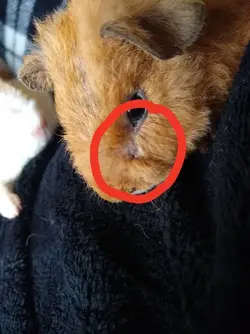
I picked up 2 gorgeous teddy guinea pigs yesterday they are both 6 weeks old but noticed they both had a hard lump of fur on their faces. I have bought some grooming wipes and they made no difference to this hard lump.

On 1 of the pigs as well as that lump on his face he also has a small flakey section on his back and I have noticed a small scab on his lip.
 

Attachments

  • IMG_20190209_140630995.webp
    IMG_20190209_140630995.webp
    58.8 KB · Views: 9
  • USER_SCOPED_TEMP_DATA_orca-image-2018890835.jpeg_1549720381076.webp
    USER_SCOPED_TEMP_DATA_orca-image-2018890835.jpeg_1549720381076.webp
    55.5 KB · Views: 9
  • USER_SCOPED_TEMP_DATA_orca-image-1068492163.jpeg_1549720361077.webp
    USER_SCOPED_TEMP_DATA_orca-image-1068492163.jpeg_1549720361077.webp
    45.1 KB · Views: 9
  • IMG_20190209_133318947.webp
    IMG_20190209_133318947.webp
    47.8 KB · Views: 8
I picked up 2 gorgeous teddy guinea pigs yesterday they are both 6 weeks old but noticed they both had a hard lump of fur on their faces. I have bought some grooming wipes and they made no difference to this hard lump.

On 1 of the pigs as well as that lump on his face he also has a small flakey section on his back and I have noticed a small scab on his lip.

Hi and welcome!

I am very sorry for falling victim to bad practice.

Please have your piggies vet checked for ringworm, a highly infectious and transmittable fungal skin infection that can also transmit to humans and other species pets. Unfortunately it is not at all uncommon in any guinea pigs that come from a place without mandatory quarantine (shops, breeders and sub-standard/no quarantining or vet care rescues).
You can find more information on ringworm and your customer rights via this link here: What to check and look out for in new guinea pigs (vet checks, sexing, parasites&illness)

Please be aware that we can only make educated guesses, but not diagnose, and that we do not recommend home treatment on spec.

Key to successful ringworm treatment is good anti-fungal care that includes the whole body and strict hygiene to prevent the spread (including onto you) and recurring re-infections since spores are invisible, shed in their thousands and can stay live for up to 18 months.
A vet grade anti-fungal and not just the usual all purpose anti-bacterial disinfectant is a must. Our ringworm hygiene guide will take you through all the details. We've had a dozen years experience to figure out all the ways transmission can happen and how to prevent it; our advice really works! You also have to brace yourself that any acute outbreak has to run its due course and will get worse before it gets better. You can find the relevant pictures for the various stages in the guide, too.
Ringworm: Hygiene And Pictures

You can find more practical and very helpful advice on all the areas we get the most questions and concerns about via our New Owners guide collection: Getting Started - New Owners' Most Helpful Guides
 
Hi and welcome!

I am very sorry for falling victim to bad practice.

Please have your piggies vet checked for ringworm, a highly infectious and transmittable fungal skin infection that can also transmit to humans and other species pets. Unfortunately it is not at all uncommon in any guinea pigs that come from a place without mandatory quarantine (shops, breeders and sub-standard/no quarantining or vet care rescues).
You can find more information on ringworm and your customer rights via this link here: What to check and look out for in new guinea pigs (vet checks, sexing, parasites&illness)

Please be aware that we can only make educated guesses, but not diagnose, and that we do not recommend home treatment on spec.

Key to successful ringworm treatment is good anti-fungal care that includes the whole body and strict hygiene to prevent the spread (including onto you) and recurring re-infections since spores are invisible, shed in their thousands and can stay live for up to 18 months.
A vet grade anti-fungal and not just the usual all purpose anti-bacterial disinfectant is a must. Our ringworm hygiene guide will take you through all the details. We've had a dozen years experience to figure out all the ways transmission can happen and how to prevent it; our advice really works! You also have to brace yourself that any acute outbreak has to run its due course and will get worse before it gets better. You can find the relevant pictures for the various stages in the guide, too.
Ringworm: Hygiene And Pictures

You can find more practical and very helpful advice on all the areas we get the most questions and concerns about via our New Owners guide collection: Getting Started - New Owners' Most Helpful Guides

Thankyou so much for your fast response! I have spoken to a vet now who has also said it's most likely ringworm and are getting bay in touch with the breeder so see if she can sort out vet bills to get them sorted out as soon as possible. Hopefully as well it might avoid all her other piggies getting it too
 
Thankyou so much for your fast response! I have spoken to a vet now who has also said it's most likely ringworm and are getting bay in touch with the breeder so see if she can sort out vet bills to get them sorted out as soon as possible. Hopefully as well it might avoid all her other piggies getting it too

As your boys have it in several places, it means long term exposure to it; the time between infection and outbreak is 10-14 days. Each infection spot means a spore has got to your piggies. With so many spots at once that means bad hygiene and a long term untreated problem with spores shed literally everywhere. Normally we only see piggies with just one acute spot; more develop with the creaming method, which only addresses acute areas (and then only part of them) but not any there places on the body where spores can have got to and cause secondary infections in due time.
It is rather safe to assume that the breeder is simply out for the money but not bothering about vet care. Did you actually see the premises and other piggies or were your babies just handed over?

Sadly anybody can call themselves a breeder without licensing and any welfare control in place. The same goes for rescues, hence why we have a rescue locator for those vetted good standard rescues with mandatory quarantine and vet care that are by far the safest place to get guinea pigs from that do not come with nasty surprises.
If the breeder is not prepared to cooperate and is trying to wiggle out, you can report them to your local council over trading standards - if they advertise their guinea pigs for sale in some form, then they fall under that category.

I am very sorry that you have such a tough start. Because your piggies have several affected areas, the best method would be to treat orally in order to make sure that you reach all nooks and crannies. Use two baths, one at the start and one at the end to wash any spores from their coats. And please make sure that you yourself and any person handling the piggies is having an all-body nizoral/anti-dandruff shampoo themselves in order to prevent coming down with ringworm themselves. It is not pleasant at all, especially in children. All these aspects (and more) are detailed in our ringworm hygiene guide to help you make sure that you deal with ringworm only once. It is going to be a tough couple of weeks, but if you do it right, you can get past it once and for all.

I have used my own advice a year ago in a room with 30 piggies and have managed to contain the infection to the one infected piggy, so it can be done! ;)
 
As your boys have it in several places, it means long term exposure to it; the time between infection and outbreak is 10-14 days. Each infection spot means a spore has got to your piggies. With so many spots at once that means bad hygiene and a long term untreated problem with spores shed literally everywhere. Normally we only see piggies with just one acute spot; more develop with the creaming method, which only addresses acute areas (and then only part of them) but not any there places on the body where spores can have got to and cause secondary infections in due time.
It is rather safe to assume that the breeder is simply out for the money but not bothering about vet care. Did you actually see the premises and other piggies or were your babies just handed over?

Sadly anybody can call themselves a breeder without licensing and any welfare control in place. The same goes for rescues, hence why we have a rescue locator for those vetted good standard rescues with mandatory quarantine and vet care that are by far the safest place to get guinea pigs from that do not come with nasty surprises.
If the breeder is not prepared to cooperate and is trying to wiggle out, you can report them to your local council over trading standards - if they advertise their guinea pigs for sale in some form, then they fall under that category.

I am very sorry that you have such a tough start. Because your piggies have several affected areas, the best method would be to treat orally in order to make sure that you reach all nooks and crannies. Use two baths, one at the start and one at the end to wash any spores from their coats. And please make sure that you yourself and any person handling the piggies is having an all-body nizoral/anti-dandruff shampoo themselves in order to prevent coming down with ringworm themselves. It is not pleasant at all, especially in children. All these aspects (and more) are detailed in our ringworm hygiene guide to help you make sure that you deal with ringworm only once. It is going to be a tough couple of weeks, but if you do it right, you can get past it once and for all.

I have used my own advice a year ago in a room with 30 piggies and have managed to contain the infection to the one infected piggy, so it can be done! ;)

All your information has been amazing and so helpful. Just the support I needed to get through that stress. Have just returned from the vets and they have said it could be ringworm but it's likely to be just a fungal infection caused by mites and has given ivermectin and daktarin cream to help them.

The breeder we got them of clearly loves all her animals and is very enthusiastic about it all however when we got in touch with her she seemed very short and impatient with us (maybe worried about backlash).

From research I have done I am certain they have got this infection from the sawdust she was using in their hutch! I am aware how bad this can be for piggies and thankfully did my research beforehand and got them fleece so with any luck it will all clear up and they should stay happy and healthy after that 😄😄
 
All your information has been amazing and so helpful. Just the support I needed to get through that stress. Have just returned from the vets and they have said it could be ringworm but it's likely to be just a fungal infection caused by mites and has given ivermectin and daktarin cream to help them.

The breeder we got them of clearly loves all her animals and is very enthusiastic about it all however when we got in touch with her she seemed very short and impatient with us (maybe worried about backlash).

From research I have done I am certain they have got this infection from the sawdust she was using in their hutch! I am aware how bad this can be for piggies and thankfully did my research beforehand and got them fleece so with any luck it will all clear up and they should stay happy and healthy after that 😄😄

Please still give them a bath (any skin treatment needs 48 hours to get properly to work, so you have to fit that in around the ivermectin) as creaming is not taking care of any spores. I am very sorry, but vets often are not quite aware how important this angle is; if it IS ringworm, creaming is simply not enough! I would also be very conscientious about disinfection etc.
In my own experience fungal skin infections are the one area where overkill is really worth it as any resulting mess from doing too little is a lot worse.
 
Please still give them a bath (any skin treatment needs 48 hours to get properly to work, so you have to fit that in around the ivermectin) as creaming is not taking care of any spores. I am very sorry, but vets often are not quite aware how important this angle is; if it IS ringworm, creaming is simply not enough!

I will definitely give them a bath tonight and am going to change their fleece and give the whole cage a big scrub down too just to be on the safe side. Will definitely be keeping an eye on it and hope it isn't ring worm!
 
Wiebke is absolutely right and speaks from a high level of knowledge. I took on board all the information from the forum here and sought the right treatment for ringworm including being careful not to catch the infection myself. I had no reoccurence in those piggies either.
 
Wiebke is absolutely right and speaks from a high level of knowledge. I took on board all the information from the forum here and sought the right treatment for ringworm including being careful not to catch the infection myself. I had no reoccurence in those piggies either.

Wiebke definitely speaks like they know their stuff and am so thankful for both your responses I am 100% going to take all advice on board just to be safe 😄 only the best for our piggies
 
Back
Top