

Abi_nurse
Adult Guinea Pig
- Joined
- Jun 25, 2010
- Messages
- 4,544
- Reaction score
- 1,424
- Points
- 845
- Location
- Welwyn Garden City, Hertfordshire.
(I may move this over to my guinea pig guru section once people have read it (just to file it away). But thought i would post here.
I had wanted to redo my guinea pig room for quite sometime. After moving into my home some 6 years prior the gang had been residing in a C&C cage, which had been modified various times depending on herd numbers and further groups, the carpet had seen better days and I wanted to get them up and off the floor. I finally took the plunge last summer, I am no DIY wiz but was quite pleased with my results. So here’s a little run down on how I made the run, the costs and worked needed to be put in. There are some amazing custom made runs available out there, so you don’t need to do one yourself should you feel like your not up to it, but I surprised myself, so I say give yourself a challenge.
Heres the old room:

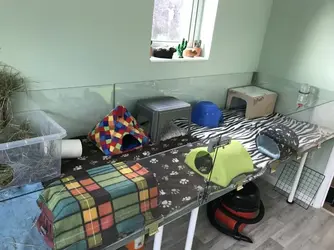
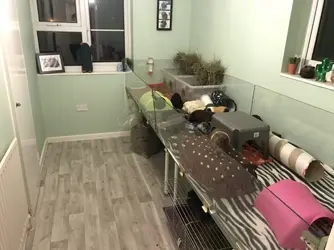
And what it looks like finished now:

Size: The enclosure is approximately 90cm (~3 foot) but 330cm (~11 foot) and is all one level. I made it in two halves which made it easier to maneuver into place in the room.
Materials: the edging is acrylic – anti shatter and drillable too. The base is MDF. I chose acrylic over wood and mesh/C&C for a number of reasons. This included, being easier to clean, wood is impossible to clean should infection or fungus get rooted into it, and pigs tend to chew on it sometimes. Grids are also a pain to clean and as we all know piggies love to kick poos out of them. With a more solid barrier it keeps all their mess in (well sort of in).
Cost: the whole project (just the run) cost approximately £500. I also decorated the room which cost much less than this, just a few licks of wipeable wall paint and a new lino floor. Lino was the best floor for this room as it is easily cleaned and I can mop the floor regularly.
How long did it take: it took 2 full days work to build the run (about 16 hours or more – didn’t time myself but I was building from morning until bed both days, but someone more DIY savvy will probably have been much quicker.) It took a few more hours of planning too, this was probably the hardest part – measuring and designing the run and ensuring the measurements were as accurate (I am a bit of a perfectionist).
The building process:
Planning: this was probably the hardest part of this project because I wanted to ensure I got all the measurements correct. Both the wood base and the acrylic edges were cut to measure to the millimeter, so it was really important I got this right. The front pieces of acrylic are actually shorter because they are not drilled into the base and are hinged, all this had to be taken into account.
Materials: I bought both the base and the acrylic online, these were ordered to measure and actually took the longest to get hold of. But they were perfect when arrived. The rest of the materials I got from my local hardware store (apart from the table legs which I got from ikea). The only tools I needed was a good hand held electric drill/screwdriver, a hand held saw (for the hay boxes), a Stanley knife, ruler, pencil and a lot of patience.
The process: Once I had all the materials to hand (there was a few extra trips to the store for little things) i built it in the following way.




Pinch points: (most of this is me being over critical). There were a few things that I found difficult on the run and a few things that I think could have been changed. The first is the fact that one end of the run doesn’t sit well in the lock because the acrylic bends out naturally. If this was tighter to the wall it wouldn’t be an issue, but I wanted to leave myself a little room for error so didn’t measure the run to fit too snugly into the room. The wooden blocks used to hold the locks in place are flimsy and will need replacing one day – the pigs also like to chew on it. Lol. I had to get a longer bolt for the central lock to make it fit. The front edges feel flimsy, but they are absolutely fine, however I may have a smaller hinged part should I do this again, just so it feels more solid. I wish I had steadier table legs, although they hold, the whole run is quite heavy. Price is also a downfall but I wanted a good quality run. The only other point is that it cannot be extended easily (but this is a good things for me, it means I limit my piggie numbers). Leaning over to catch pigs out without dropping the side is a stretch, I manage but I am tall. Dropping the sides would be better, or making the run slightly shorter. Hay gets down the back, it’s a bit of a pain but nothing major, I also had to stick the hay racks in place as the herd kept knocking them off.
Bests bits: The best parts of the run are the following.
I had wanted to redo my guinea pig room for quite sometime. After moving into my home some 6 years prior the gang had been residing in a C&C cage, which had been modified various times depending on herd numbers and further groups, the carpet had seen better days and I wanted to get them up and off the floor. I finally took the plunge last summer, I am no DIY wiz but was quite pleased with my results. So here’s a little run down on how I made the run, the costs and worked needed to be put in. There are some amazing custom made runs available out there, so you don’t need to do one yourself should you feel like your not up to it, but I surprised myself, so I say give yourself a challenge.
Heres the old room:
And what it looks like finished now:
Size: The enclosure is approximately 90cm (~3 foot) but 330cm (~11 foot) and is all one level. I made it in two halves which made it easier to maneuver into place in the room.
Materials: the edging is acrylic – anti shatter and drillable too. The base is MDF. I chose acrylic over wood and mesh/C&C for a number of reasons. This included, being easier to clean, wood is impossible to clean should infection or fungus get rooted into it, and pigs tend to chew on it sometimes. Grids are also a pain to clean and as we all know piggies love to kick poos out of them. With a more solid barrier it keeps all their mess in (well sort of in).
Cost: the whole project (just the run) cost approximately £500. I also decorated the room which cost much less than this, just a few licks of wipeable wall paint and a new lino floor. Lino was the best floor for this room as it is easily cleaned and I can mop the floor regularly.
How long did it take: it took 2 full days work to build the run (about 16 hours or more – didn’t time myself but I was building from morning until bed both days, but someone more DIY savvy will probably have been much quicker.) It took a few more hours of planning too, this was probably the hardest part – measuring and designing the run and ensuring the measurements were as accurate (I am a bit of a perfectionist).
The building process:
Planning: this was probably the hardest part of this project because I wanted to ensure I got all the measurements correct. Both the wood base and the acrylic edges were cut to measure to the millimeter, so it was really important I got this right. The front pieces of acrylic are actually shorter because they are not drilled into the base and are hinged, all this had to be taken into account.
Materials: I bought both the base and the acrylic online, these were ordered to measure and actually took the longest to get hold of. But they were perfect when arrived. The rest of the materials I got from my local hardware store (apart from the table legs which I got from ikea). The only tools I needed was a good hand held electric drill/screwdriver, a hand held saw (for the hay boxes), a Stanley knife, ruler, pencil and a lot of patience.
The process: Once I had all the materials to hand (there was a few extra trips to the store for little things) i built it in the following way.
- Painted the edges of my MDF (so it kept the same colour as the room)
- Laid vinyl tiles on the top of the wooden base (I thought vinyl would be more waterproof and wipeable) I considered using correx and other metheds but found this worked for me. The vinyl was £40 so was quite an expense and also weighty for the table itself)
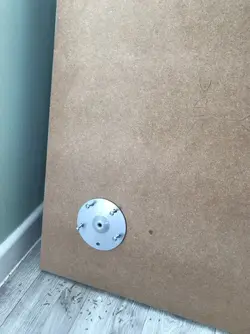
- Drilled the table leg brackets into the bases (I used a C&C grid to space these evenly – came in very handy – just counted a certain number of squares in and drew a cross in it to mark the spot
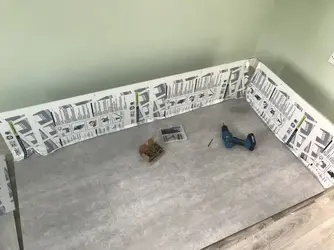
- Pre drilled and then screwed the two main edges to each table into each one. The acrylic was the more pricey one for the exact reason I knew I wanted to drill into it without risk of shattering or it fading in the sun. (acrylic sides cost £220 altogether so about half of the whole cost)
- Cut small rectangles of wood and painted them innkeeping into the room to drill and screw into each corner to hold the sides together (I wanted to avoid wood but found I needed to use some unfortunately)
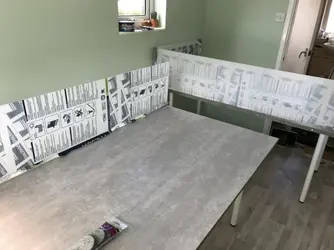
- Once the two back and sides were done I screwed the table legs on and with a second person lifted the run into the final position
- Cut, painted and screwed on wooden blocks on both sides to hold the locks in place
- Screwed lock parts onto the base and sides
- Cut, painted and screwed on wooden blocks onto the front pieces of acrylic to hold the hinges on and to hold the locks in place. (all of these were fiddly – getting the locks in place and to line up
- Screwed the front acrylic pieces onto the base on hinges so these could be dropped for down for regular run clean outs.
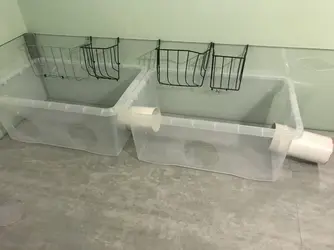
- Purchased the storage boxes for hay boxes and duct tubing for them. Measured and drilled holes out of the boxes using a hand held Dremel saw, the front holes are bigger than the side tubing holes.
- Fixed the water bottles on the edges using 4 sticky hooks
Pinch points: (most of this is me being over critical). There were a few things that I found difficult on the run and a few things that I think could have been changed. The first is the fact that one end of the run doesn’t sit well in the lock because the acrylic bends out naturally. If this was tighter to the wall it wouldn’t be an issue, but I wanted to leave myself a little room for error so didn’t measure the run to fit too snugly into the room. The wooden blocks used to hold the locks in place are flimsy and will need replacing one day – the pigs also like to chew on it. Lol. I had to get a longer bolt for the central lock to make it fit. The front edges feel flimsy, but they are absolutely fine, however I may have a smaller hinged part should I do this again, just so it feels more solid. I wish I had steadier table legs, although they hold, the whole run is quite heavy. Price is also a downfall but I wanted a good quality run. The only other point is that it cannot be extended easily (but this is a good things for me, it means I limit my piggie numbers). Leaning over to catch pigs out without dropping the side is a stretch, I manage but I am tall. Dropping the sides would be better, or making the run slightly shorter. Hay gets down the back, it’s a bit of a pain but nothing major, I also had to stick the hay racks in place as the herd kept knocking them off.
Bests bits: The best parts of the run are the following.
- Size – nothing beats a run of this size, I love it
- Hinged front makes it so much easier to clean out and access all edges
- Ability to disinfect and clean is amazing – this was the main reason for spending so much and making it wipeable
- Less pig poos and hay kicked out (they still manage to sneak some between the tiny gap between the two bits of halves
- More security against dogs, and some cats (but a raised C&C would do the same)
- Ability to sit and watch the herd, and take photos through the acrylic sides (lets face it we all love to take photos of them!)
- Storage space underneath
Last edited:




 x
x
