• Discussions taking place within this forum are intended for the purpose of assisting you in discussing options with your vet. Any other use of advice given here is done so at your risk, is solely your responsibility and not that of this forum or its owner. Before posting it is your responsibility you abide by this Statement

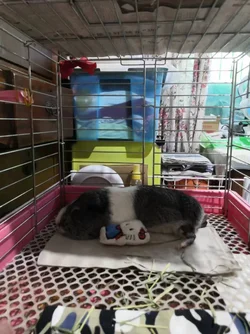
Dear friends and family, please help this poor child. His parents in China are truly heartbroken!

dongzheng

Junior Guinea Pig
Joined
Jul 14, 2025
Messages
327
Reaction score
89
Points
280
Location
Burnaby Vancouver
Guinea pig, female, five years and three months old
On 7 May, she developed a tilted head and loss of appetite. She was diagnosed with otitis interna at the hospital and treated with Baytril for 10 days, but it was ineffective. She then developed meningitis, seizures, and nystagmus. She was injected with sulfamethoxazole for seven days, which stabilised her condition, but she still had no appetite and did not eat much grass, although she could eat grain.
On 7 June, she stopped eating grains and hay. She was taken to the hospital for another X-ray, which showed that the inner ear inflammation persisted, causing loss of appetite. It was also suggested that her teeth might be growing, but an oral examination required anaesthesia. I requested a biochemical test, but the doctor feared she might struggle and experience stress, given her poor condition and the fact that the inner ear inflammation was incurable. The doctor recommended euthanasia and prescribed Maboxetine for home use. However, the side effects were severe, so the medication was discontinued. The rabbit still refused to eat and experienced ear pain. Sulfonamide 480 was administered for six days, which seemed to have some effect, as the rabbit showed a slight increase in appetite.
On 17 June, due to eating too much vegetables, severe bloating occurred. Treatment for bloating was administered. By the 20th, sudden swallowing and chewing difficulties arose, and even water could not be swallowed. I researched online and suspected a vitamin C deficiency, so I administered half a tablet of human-grade vitamin C. After several days of administration, by the 28th, the bloating had subsided, appetite had returned, and the animal could eat grass again.
On 9 July, after eating corn leaves, bloating resumed. Taking bloating medication provided some relief, but symptoms returned upon discontinuation. Daily bloating persisted, with each episode preventing defecation; any stool expelled was small and pointed. Currently unable to consume any vegetables.
On 30 July, I suddenly noticed that he couldn't eat grass again. He had an appetite but couldn't chew. I suspected another vitamin C deficiency and gave him human vitamin C again, previously administered as 0.5ml of liquid vitamin C.
On 31 July, I took him to the hospital. The doctor examined his mouth, ears, biochemistry, liver damage, and heart enlargement. On the day of the hospital visit, he had no bloating and defecated smoothly. The doctor did not order an X-ray. At the time, I requested an X-ray, but the doctor said that X-rays of the ears are not accurate. They examined the ears with an otoscope and then used the otoscope to examine the mouth. To examine the deeper parts of the mouth, anaesthesia is required, so they could only examine the superficial parts of the mouth. They said the teeth are currently fine, but the liver damage is quite severe, and there is still chronic inflammation in the body. The doctor didn’t have any good solutions and said that even with medication, it won’t recover. They prescribed two boxes of supplements.
Every day, he endures the pain, which is very pitiful.
 

Attachments

  • 微信图片_20250806025707_18.webp
    微信图片_20250806025707_18.webp
    72.7 KB · Views: 3
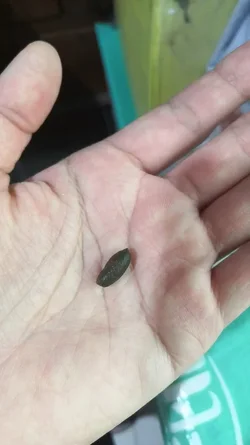
I assume this is not your guinea pig.

Vitamin c deficiency is not the first thing to consider when a piggy stops being able to eat. Being unwilling to eat is a general sign of illness but being unable to chew is generally a sign of a problem in the mouth. The first thing is dental issues or pain. So yes an ear infection can stop them wanting to eat. But that has absolutely nothing to do with vitamin c deficiency.

Unless a piggy is anaesthetised and the back teeth checked properly then it is not possible to rule out a dental or mouth issue.

The treatment for an ear infection is antibiotics and painkillers.

If a piggy stops eating you must step in with syringe feeding a recovery feed like the oxbow critical care that I know you know about. Weight checks need to be done daily. Lack of poop is due to not consuming enough hay or syringe feeding.
If a piggy has bloat in then they should not be given any vegetables. Bloating requires gut stimulants and pain medications along with the syringe feeding.
Vitamin c will not treat bloating.

Liver issues are not usually treatable in guinea pigs unfortunately
Yes, this isn't my guinea pig. I recommended this website to everyone in the Chinese group so they could learn more about guinea pigs, and then this sister asked for help. I added her on my own initiative, and during our chat, I found out that her child was so pitiful. This sister is just like me; we are both willing to sacrifice our own lives so that the guinea pigs don't have to suffer. I feel very sorry for her and understand her situation.
Because he has been taking meloxicam since May, taking it every day, and has been using painkillers all along. It’s only been stopped for a short while. I think we should pause it for now, as it causes significant damage to the liver and kidneys. Due to inner ear inflammation treated with antibiotics for over two months, liver function was impaired, affecting the gastrointestinal tract, which became extremely fragile. There was frequent bloating, inability to defecate, and abdominal pain. Currently, vegetables have been discontinued, but the symptoms persist. Using prokinetic drugs alleviates the symptoms, but bloating recurs after discontinuation. It feels like nothing is digesting. How can the fragile gastrointestinal tract be regulated? Currently, only a few grains are being passed.
 
He also knows that he needs to feed the pig intensively, but his family says that feeding it intensively causes bloating?
 
Meloxicom does not damage kidneys in guinea pigs.
They have fast metabolisms which means they process painkillers differently to other animals so this is why it doesn’t cause kidney damage.
We have guinea pigs on here who have been on it daily for years for long term conditions.
If this piggy is in significant pain then stopping the pain killers would be very cruel.

Long term antibiotics can do this to the gut.
Using probiotics or better still live microbiome transfer from a companion guinea pig can help.
However it is not necessarily going to be a fix is things are so badly damaged now

He also knows that he needs to feed the pig intensively, but his family says that feeding it intensively causes bloating?

Syringe feeding does not cause bloating.

Not eating enough can cause bloating: not eating enough can cause gut stasis. This is a major risk factor is they dont feed it.
 
Meloxicom does not damage kidneys in guinea pigs.
They have fast metabolisms which means they process painkillers differently to other animals so this is why it doesn’t cause kidney damage.
We have guinea pigs on here who have been on it daily for years for long term conditions.
If this piggy is in significant pain then stopping the pain killers would be very cruel.

Long term antibiotics can do this to the gut.
Using probiotics or better still live microbiome transfer from a companion guinea pig can help.
However it is not necessarily going to be a fix is things are so badly damaged now


Syringe feeding does not cause bloating.

Not eating enough can cause bloating: not eating enough can cause gut stasis. This is a major risk factor is they dont feed it.
Previously, he had injected the pig with 0.6 millilitres of lubricating oil, but then added a large amount of water. The oil was intended to help lubricate the intestines and facilitate the expulsion of faeces blocking the intestines. However, since he added water, I am concerned that the mixture of oil and water may exacerbate the condition. After hearing what you said, he quickly administered painkillers and all the medications available to stimulate intestinal peristalsis. The pig had not defecated for a long time, and I am concerned it may die from intestinal obstruction. What should we do now?
 
I have absolutely no idea why injecting lubricating oil would be done - I have never heard of that.

Syringe feeding plenty of a fibre rich recovery feed and giving a gut stimulating medication would have been the expected course of action. If a piggy isn’t pooping, then it is usually because they are not getting enough food. Gut stasis can occur either partially or fully.
This is why they need daily weight checks to help gauge the situation.

I cannot say whether this piggy has an obstruction at all - it’s simply impossible for anybody other than a vet to diagnose that.
By way of general information on blockages, this is not a diagnosis - If there is any blockage in the gut then nothing would be processed, food can start to come back out (not through vomiting but instead through it not being processed), salivating can happen as saliva also can’t be processed.
An obstruction is an emergency situation, and in a major obstruction most piggies do not survive

To be very clear - I have absolutely no way of knowing whether this piggy actually does have an obstruction, I cannot do anything other than give general advice, I cannot diagnose, I cannot tell you what treatment needs to be given.

I know it’s difficult to see a vet in china but we cannot tell you what to do anything other than see a vet
If the piglet is not completely blocked, this folk remedy—drinking sesame oil—remains effective even if it has not defecated. In emergencies, it is indeed very useful. The prerequisite is that this is purely due to the intestines being unable to contract, causing food to become blocked inside the body. In such cases, you can give it 1 millilitre of sesame oil to drink, plus massage the abdomen for 30 minutes or even longer. This is a traditional Chinese folk remedy for constipation and inability to defecate. At the time, my family also encountered this situation, so we tried this method as a last resort. It worked. That sister's piglet might have been severely blocked because it rarely defecated or defecated very little.
 
If the piglet is not completely blocked, this folk remedy—drinking sesame oil—remains effective even if it has not defecated. In emergencies, it is indeed very useful. The prerequisite is that this is purely due to the intestines being unable to contract, causing food to become blocked inside the body. In such cases, you can give it 1 millilitre of sesame oil to drink, plus massage the abdomen for 30 minutes or even longer. This is a traditional Chinese folk remedy for constipation and inability to defecate. At the time, my family also encountered this situation, so we tried this method as a last resort. It worked. That sister's piglet might have been severely blocked because it rarely defecated or defecated very little.

That is a traditional treatment for you then - it is not something we would ever advocate or encourage to be done to a guinea pig. We will not advise on such treatments

Guinea pigs do not get constipation. Not pooping much is down to not getting enough fibre to eat.

An actual blockage is not a common event, but when it does happen it is an emergency, it is usually fatal and would not be cured by oil.
Brother, I want to ask you, in general, when the intestines are blocked, is it that you don't defecate, or do you vomit?
 
If there is a blockage then it can occur anywhere between the mouth and the back passage. Any saliva would come back out the mouth (this is not vomiting, it is simply that it has nowhere to go and just falls back out the mouth).

But a blockage, and I have to make this very clear - is an absolute emergency, it’s painful, it will come on suddenly and can kill incredibly quickly.
It would need a scan to diagnose a blockage and to identify where in the system it had occurred.

Digestive Disorders: Not Eating - Diarrhea - Bloat - GI Stasis (No Gut Movement)
 
That is a traditional treatment for you then - it is not something we would ever advocate or encourage to be done to a guinea pig. We will not advise on such treatments

Guinea pigs do not get constipation. Not pooping much is down to not getting enough fibre to eat.

An actual blockage is not a common event, but when it does happen it is an emergency, it is usually fatal and would not be cured by oil.
Because this sister also told me that their pig ate quite a lot last night, but has not defecated. She said that the reason for changing the grass was not what I thought, just as you said at the beginning, it did not defecate because it did not consume enough fibre. I just explained it to him again, the reason why guinea pigs do not defecate, as you taught and explained to me. I told him that if the pig’s weight the next day is less than a certain amount compared to the previous day, it proves that it’s not getting enough fibre. The sister replied that their pig’s weight decreases by 20 grams every day compared to the previous day. I said, that’s because it’s not getting enough fibre. I told him what you taught me at the time. I told him, you can’t tell with your eyes whether it’s getting enough fibre or not. Hahaha, thank goodness I have such a good teacher like you! 😘
 
Poop output is 1-2 days behind food intake. So if piggy ate a lot last night then the poop will come but it will be either later on today or even tomorrow before it is seen

I can say though that if this piggy has been happily eating then there is not a blockage

I’m glad that has helped you - you are right to tell them that if a piggy is losing 20g a day then that is a downward trend and they need to step in with syringe feeding, 60ml per day, to stop further weight loss
 
Oh my goodness, he's been using the wrong method all along, and I only found out now. First of all, the grass powder he's been feeding isn't intensive care, just like mine. He's been giving him a brand called Emeraid, and I actually bought that brand yesterday because I wanted to switch things up for him. But after seeing his, I realised it has a very high nutritional content, and it's different from the intensive care powder—it's more like soy milk powder, and it gets very oily if left for too long. I immediately stopped him from using it. He had been giving this brand all along. He said his child didn't like Oxbow. He didn't manually feed the child; he just let the child eat whatever they wanted. Moreover, he ground this stuff into powder with his own hands and made it into small balls. Just thinking about it is terrifying—how dry it must be!
 
Emeraid for herbivores is absolutely fine to use.
Please tell this person that it is absolutely fine for them to use emeraid for herbivores.
(What they cannot do is use version of emeraid for carnivores)
If a piggy doesn’t like the oxbow brand then we absolutely would suggest emeraid is tried.
It does have a different nutrient level which can be very helpful for very poorly piggies.

It can only be made up at each feed though. They can’t make a large batch and use it throughout the day - they need to make enough for each feed, each time.
If I remember correctly, some versions of emeraid (I think it might be the emeraid intensive) are fortified with probiotics so additional pro optics should not be given if that version of emeraid is being used.

Making a recovery feed into balls and expecting a poorly piggy to eat it itself is not the right thing to do. A poorly piggy who is not eating for themselves needs to be syringe fed
 
Poop output is 1-2 days behind food intake. So if piggy ate a lot last night then the poop will come but it will be either later on today or even tomorrow before it is seen

I can say though that if this piggy has been happily eating then there is not a blockage

I’m glad that has helped you - you are right to tell them that if a piggy is losing 20g a day then that is a downward trend and they need to step in with syringe feeding, 60ml per day, to stop further weight loss
He doesn't have Critical Care in his hand now, and his piglet's belly seems much softer than before. His little pig also actively eats oxbow senior guinea pig food, before he was afraid that the pig would bloat. The guinea pig food has not been given for almost a month, and her little pig is now eating guinea pig food. She only gives 20 grains. I taught him the emergency method you taught me, and I asked him to take the guinea pig food to grind it into powder and mix it with water for her. The sister said she didn't need to feed her with an injection syringe. Even the piglets will come to eat on their own initiative,
 
Ok, so a piggy who is eating enough hay on their own will not be losing weight. You said that this piggy is losing 20g per day which suggests it is not eating enough hay and that it does in fact still need to be syringe fed.
It either is losing weight because it isn’t eating or it is not losing weight and is eating absolutely fine.
Eating the guinea pig food is not the priority - eating hay is the priority for any piggy.
Eating Guinea pig food does not cause bloat directly.

I am a bit confused by this thread - there is concern about potentially fatal blockage, severe liver damage, ear infections potential dental issues, bloating, weight loss but now it is eating perfectly fine on its own.
I’m rather unsure as to what is actually wrong here.
 
mmexport1754553354137.webp
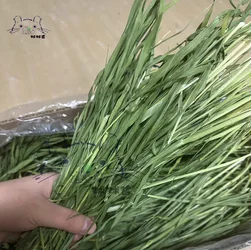
Oh my God, he's been giving him fresh Timothy grass, not licorice.It seems they are all doing the same thing as me on the hay. I told him to give him dried Timothy grass. Instead of the soft drying process of Timothy grass, so his pigs can't move their intestines now, which is too much related to the grass he gave.
 
View attachment 273932
Oh my God, he's been giving him fresh Timothy grass, not licorice.It seems they are all doing the same thing as me on the hay. I told him to give him dried Timothy grass. Instead of the soft drying process of Timothy grass, so his pigs can't move their intestines now, which is too much related to the grass he gave.

I think you are misunderstanding.
They absolutely can eat fresh Timothy grass but any fresh grass needs to be introduced slowly so as to not cause bloating. During a bloat episode, no fresh food should be given but it can be reintroduced once the bloating has settled.
The main bulk of the diet should be hay but only because enough grass can be difficult to get hold of and any sudden introduction of too much fresh grass on an unprepared gut can cause a digestive upset.
Giving fresh grass if they are used to it is not a problem but you would ideally still want to make sure lots of hay is available.
Some people can only feed fresh grass as certain countries struggle to get hay.

This piggy’s intestines are moving because the piggy is pooping and you have said it is eating. The poop in the picture looks ok to me.

I’m still not sure what the main concern here is:

Is it an ear infection - in which case treatment would be antibiotics and painkillers.

Is it bloating - which would be treated through gut stimulants, painkillers, removing all fresh veg and lots of syringe feeding

Is it liver damage - for which there may not be any treatment
 
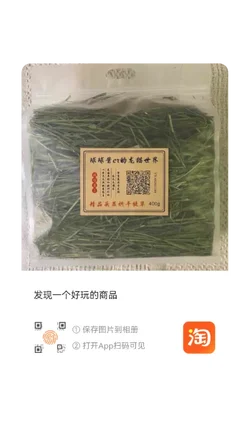
When I mentioned grass, I suddenly thought, if my pig likes the two types of grass in the pictures below, could I use them to replace the dry grass it currently eats?

In addition, my mother found that as long as she fed it this dry grass, its faeces would be larger and lighter in colour than usual, unlike when it ate the grass in the two pictures above, where the faeces were black. However, it still didn't like dry grass very much because the stems were numerous and hard. Hahaha 😂
 

Attachments

  • tb_image_share_1752520617046-jpg-webp.webp
    tb_image_share_1752520617046-jpg-webp.webp
    109.7 KB · Views: 3
  • tb_image_share_1752520530271.jpg.webp
    tb_image_share_1752520530271.jpg.webp
    27.6 KB · Views: 3
I think you are misunderstanding.
They absolutely can eat fresh Timothy grass but any fresh grass needs to be introduced slowly so as to not cause bloating. During a bloat episode, no fresh food should be given but it can be reintroduced once the bloating has settled.
The main bulk of the diet should be hay but only because enough grass can be difficult to get hold of and any sudden introduction of too much fresh grass on an unprepared gut can cause a digestive upset.
Giving fresh grass if they are used to it is not a problem but you would ideally still want to make sure lots of hay is available.
Some people can only feed fresh grass as certain countries struggle to get hay.

This piggy’s intestines are moving because the piggy is pooping and you have said it is eating. The poop in the picture looks ok to me.

I’m still not sure what the main concern here is:

Is it an ear infection - in which case treatment would be antibiotics and painkillers.

Is it bloating - which would be treated through gut stimulants, painkillers, removing all fresh veg and lots of syringe feeding

Is it liver damage - for which there may not be any treatment
It's been so long now, and he only took one grain. He was given probiotics. He was given them in the morning, so should he be given them now? What kind of grass should he eat? He had been eating this fresh timothy grass for five years.
 
Fresh grass can be given but only if their gut is used to it.
If your piggy doesn’t like the hard stems then try a different type.

A piggy only needs probiotics if they have a tummy upset
 
Okay, thank you.
But isn't it said that pigs with UTI can't eat fresh grass with too high nutritional content? Because I have checked the composition of many fresh grass, its nutritional content and protein will be higher than that of dry grass. In addition, he still has crystals now, and I plan to start with stable hay and a small amount of fresh grass, or even not give it at all.
 
But isn't it said that pigs with UTI can't eat fresh grass with too high nutritional content? Because I have checked the composition of many fresh grass, its nutritional content and protein will be higher than that of dry grass. In addition, he still has crystals now, and I plan to start with stable hay and a small amount of fresh grass, or even not give it at all.

A piggy with a UTI can still eat grass and hay.

Crystals are to do with the calcium/oxalate balance in the diet or a genetic predisposition.
You still need to feed grass and hay to a piggy with this issue

But this thread was about the other pig not about your piggy - so are you referring to your own piggy when mentioning crystals or does this other piggy with the liver problem also have crystals?
 
It is very difficult for us to give accurate answers when you are asking for others.
I can see how caring you are and perhaps the best way would be to suggest that your friend sets up their own account here so we can deal first hand with them.
I realise this may be difficult from China, or even impossible but it would help if it is possible
You are right, it is really correct for them to register their own accounts on this forum. Although I really want to help them, as the owner of Zhu Zhu, I still need them to take some actions by themselves and not rely on others to help them. Otherwise, it is impossible to prove that they truly love pigs, they can see our website, and it is not that complicated in China.
 
A piggy with a UTI can still eat grass and hay.

Crystals are to do with the calcium/oxalate balance in the diet or a genetic predisposition.
You still need to feed grass and hay to a piggy with this issue

But this thread was about the other pig not about your piggy - so are you referring to your own piggy when mentioning crystals or does this other piggy with the liver problem also have crystals?
His pigs may not have this problem.

Yesterday, due to the time difference, I gave her my mother's contact information. Today, he thanked my mother and me. He said that last night his pigs pooped more than 30 times, and she did not give them cisapride because she said it was bad for the heart. Instead, she gave them mosapride.
 
Cisapride is perfectly fine to give to a piggy who needs a gut stimulant.

Mosapride is not a routine medication for guinea pigs with gut issues

I cannot comment any further.
I have given all the care information that I can
 
Back
Top