• Discussions taking place within this forum are intended for the purpose of assisting you in discussing options with your vet. Any other use of advice given here is done so at your risk, is solely your responsibility and not that of this forum or its owner. Before posting it is your responsibility you abide by this Statement

Hay in Eye Advice

D

Deleted member 157166

Hello,

I just cleaned out the pigs and put in some fresh hay. Ginger likes to burrow and I noticed a large piece of hay sticking out of her eye. The hay was in their enclosure barely 5 minutes until I saw a piece of hay sticking out of her eye. I pretty much got it out straight away. The hay piece was soft as their hay is a soft sort of hay. I checked her eye, she’s not squinting, it’s not red or watering. I checked her eyes with a light and there’s no visible scratches on the surface.

Do I still need to take her to the vets? I’ve monitored her for the past hour and there’s no change. Ginger has had hay poke before so I know what I’m looking for.

*it’s a Saturday so they shut early at half 1

Hi

Was the hay stuck to the surface, partly stuck under a lid or had it pieced the surface and was it sticking through the surface?

If in any doubt, please see a vet. Surface scratches can still cause an ulcerating infection which won't set in immediately but which can develop in a matter of hours and deteriorate very quickly. The true extent of an injury cannot be assessed by naked eye. It requires a special dye and UV light.

I would recommend that you get hold of eye gel in preference to eye drops and always have that at home for first aid and to help the healing process.
First Aid: Immediate Care Measures and Non-medication Products
 
Stuck to the surface, I got it off with a little gentle manoeuvring. Ive been monitoring her for several hours now (6 hours). There’s been no change in eye condition or behaviour. What sort of eye gel do you recommend?
 
Hi

Was the hay stuck to the surface, partly stuck under a lid or had it pieced the surface and was it sticking through the surface?

If in any doubt, please see a vet. Surface scratches can still cause an ulcerating infection which won't set in immediately but which can develop in a matter of hours and deteriorate very quickly. The true extent of an injury cannot be assessed by naked eye. It requires a special dye and UV light.

I would recommend that you get hold of eye gel in preference to eye drops and always have that at home for first aid and to help the healing process.
First Aid: Immediate Care Measures and Non-medication Products


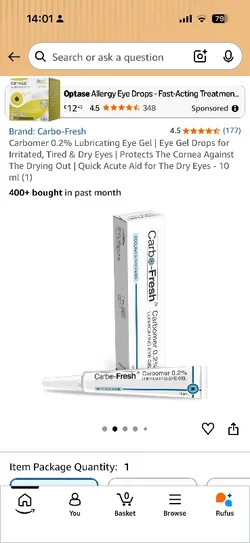
On Amazon they have this;
 

Attachments

  • IMG_4295.webp
    IMG_4295.webp
    28.2 KB · Views: 1
Basically, any human plain carbomer based gel will do. The gel is easier to apply, longer lasting in effect and able to provide comfort and an ideal healing environment even deeper in the eye.
Plain eye drops do work if you cannot get hold of gel but they need to be applied more often and are not quite as effective.

It is one of the few things that we recommend to have at home, especially for the case that you cannot see a vet straight away. In very minor cases, like yours is one, it can help to prevent an infection or slow down the onset and development if you cannot see a vet immediately although in the UK, eye injuries are if at all possible always seen on the day.

Please see a vet if you notice signs of ulceration (blueish/grey infection gunk).

How to best apply eye gel or eye drops is in our First Aid guide link in my previous post, which you may want to bookmark since problems have a bad habit to happen at the most inconvenient of times.

It’s coming later on today. So I will apply when it gets here. Hopefully I caught it really early before any damage could be done. I will strictly monitor her for the next 24 to 48 hours and any change I will go to the vets.
 
Basically, any human plain carbomer based gel will do. The gel is easier to apply, longer lasting in effect and able to provide comfort and an ideal healing environment even deeper in the eye.
Plain eye drops do work if you cannot get hold of gel but they need to be applied more often and are not quite as effective.

It is one of the few things that we recommend to have at home, especially for the case that you cannot see a vet straight away. In very minor cases, like yours is one, it can help to prevent an infection or slow down the onset and development if you cannot see a vet immediately although in the UK, eye injuries are if at all possible always seen on the day.

Please see a vet if you notice signs of ulceration (blueish/grey infection gunk).

How to best apply eye gel or eye drops is in our First Aid guide link in my previous post, which you may want to bookmark since problems have a bad habit to happen at the most inconvenient of times.

How much to apply and how many times a day with the gel? I guess a tiny amount
 
Back
Top