• Discussions taking place within this forum are intended for the purpose of assisting you in discussing options with your vet. Any other use of advice given here is done so at your risk, is solely your responsibility and not that of this forum or its owner. Before posting it is your responsibility you abide by this Statement

Please help me, I am really helpless,

Feeding critical care does not cause bloating.
Not eating enough can cause bloat and if she isn’t eating anything for herself and you don’t feed her then gut stasis can occur and that can be fatal. Therefore you must feed her if she is losing weight and not eating enough for herself.

I can’t know what the white things were.
As I have told you many times, I cannot tell you what dosage of pain meds to give. Dosage is based on weight and clinical need and must be prescribed by a vet.

Enrofloxacin can be effective for bacterial cystitis.
Sulfatrim can also be very effecfive for bacterial cystitis, it can be better than enrofloxacin.
I don’t know why you think sulfatrim would cause crystals.
Antibiotics for a UTI can need to be given for several weeks at a time.

If your vet says there aren’t many crystals then that is a good thing.
Because my veterinarian told me that sulfa antibiotics can cause crystals in the bladder, this time I was given enrofloxacin, but I stopped for two days, can I use it again now? I mean, if antibiotics are stopped for two days, can they continue to be used? So, should the time be counted from today, or how should it be counted?
 
Feeding critical care does not cause bloating.
Not eating enough can cause bloat and if she isn’t eating anything for herself and you don’t feed her then gut stasis can occur and that can be fatal. Therefore you must feed her if she is losing weight and not eating enough for herself.

I can’t know what the white things were.
As I have told you many times, I cannot tell you what dosage of pain meds to give. Dosage is based on weight and clinical need and must be prescribed by a vet.

Enrofloxacin can be effective for bacterial cystitis.
Sulfatrim can also be very effecfive for bacterial cystitis, it can be better than enrofloxacin.
I don’t know why you think sulfatrim would cause crystals.
Antibiotics for a UTI can need to be given for severNamely
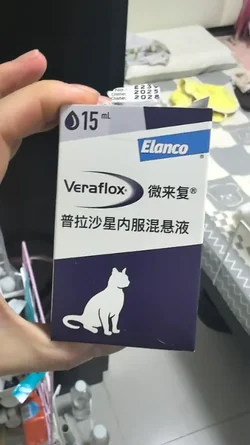
What I mean by white is that his urine is white, which is urinary calcium, and then I saw that her urine had something like sand in it, and I thought I had harmed him. Because I gave her some celery leaves and stalks the other day, she cried again today, and her urine is very little. She often squats and her hair is also swollen. I want to give her enrofloxacin again. I stopped for two days. I don't know if giving it now will make her body develop resistance.
 
Because my veterinarian told me that sulfa antibiotics can cause crystals in the bladder, this time I was given enrofloxacin, but I stopped for two days, can I use it again now? I mean, if antibiotics are stopped for two days, can they continue to be used? So, should the time be counted from today, or how should it be counted?

Its not for me to tell you what antibiotics you should use - your vet is the one who needs to determine which is the most appropriate.

What I mean by white is that his urine is white, which is urinary calcium, and then I saw that her urine had something like sand in it, and I thought I had harmed him. Because I gave her some celery leaves and stalks the other day, she cried again today, and her urine is very little. She often squats and her hair is also swollen. I want to give her enrofloxacin again. I stopped for two days. I don't know if giving it now will make her body develop resistance.

Sandy/gritty material in the urine is crystals.

If she isn’t passing much urine then that is hugely of concern.

Hair standing on end is a sign of pain
 
Feeding critical care does not cause bloating.
Not eating enough can cause bloat and if she isn’t eating anything for herself and you don’t feed her then gut stasis can occur and that can be fatal. Therefore you must feed her if she is losing weight and not eating enough for herself.

I can’t know what the white things were.
As I have told you many times, I cannot tell you what dosage of pain meds to give. Dosage is based on weight and clinical need and must be prescribed by a vet.

Enrofloxacin can be effective for bacterial cystitis.
Sulfatrim can also be very effecfive for bacterial cystitis, it can be better than enrofloxacin.
I don’t know why you think sulfatrim would cause crystals.
Antibiotics for a UTI can need to be given for several weeks at a time.

If your vet says there aren’t many crystals then that is a good thing.
I'm continuing to provide him with food now, as he previously only consumed without defecating after being fed. This time, he still hasn't passed stool after receiving food, so I'm concerned his stomach may have dilated again and his intestines become obstructed. I don't understand why he's ingesting without excreting; it's quite perplexing. Another issue is why I consistently hear a rattling sound within his body, yet have never observed him urinating or defecating? This remains utterly baffling to me.
 
I'm continuing to provide him with food now, as he previously only consumed without defecating after being fed. This time, he still hasn't passed stool after receiving food, so I'm concerned his stomach may have dilated again and his intestines become obstructed. I don't understand why he's ingesting without excreting; it's quite perplexing. Another issue is why I consistently hear a rattling sound within his body, yet have never observed him urinating or defecating? This remains utterly baffling to me.

Is her weight stable at her daily weight checks?
Poop is 1-2 days behind food intake but a piggy who is not eating enough will not poop properly. Therefore the weight checks are very important.

If she is not pooping at all shows signs of obstruction, or is not urinating properly then these are medical emergencies both of which can prove fatal. We cannot help with this situation - you would have to see a vet as a matter of urgency if this was to be the case
 
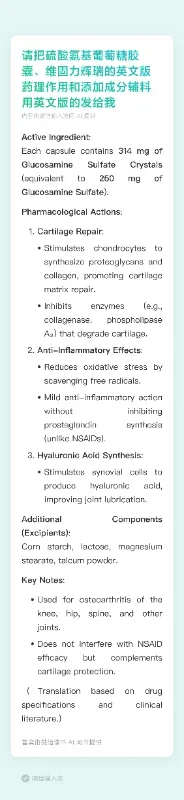
In addition, I have seen you mention glucosamine. I have this at home. It is used to treat bone and joint problems because I have already given him meloxicam. Can I give him some more of this? Will this conflict with antibiotics and painkillers? I won't give it to him at the same time. I will be separated for about 2 hours, I don't know if this can help him, he doesn't have a stool now, he doesn't drink water, I'm worried.
 
In addition, I have seen you mention glucosamine. I have this at home. It is used to treat bone and joint problems because I have already given him meloxicam. Can I give him some more of this? Will this conflict with antibiotics and painkillers? I won't give it to him at the same time. I will be separated for about 2 hours, I don't know if this can help him, he doesn't have a stool now, he doesn't drink water, I'm worried.

Glucosamine coats the bladder to help protect the bladder from the effects of corrosion from urine. It’s absolutely fine to give it along side painkillers and antibiotics. Glucosamine is a supplement, not a medication.

It will not make any difference to her ability to poop, I has nothing to do with that.
 
I cannot tell you whether this is a version suitable to use with a guinea pigs though. It depends on the ingredients Ie some meant for cats contain chicken for example so it may not be suitable
He peed out. He peed out, and this morning he was still pooping, but the poop was very small and pointed. Her weight has been unstable lately, and now it's 870,If I hadn't noticed his pain in time, he would have lost weight. If I had fed him manually in time, he might have been better. Shouldn't he be eating and defecating at the same time? Is it normal for your stool to be a day or two late?
This product is a medication for the treatment of osteoarthritis, pain and swelling. It contains no additives other than glucosamine, with each tablet containing 0.24 grams of glucosamine hydrochloride. This product is for human use only and is classified as a medicinal product, not a dietary supplement. I harbour reservations regarding this, as its primary indications are arthritis and skeletal-related conditions. I am uncertain whether glucosamine is similarly used to treat osteoarthritis in other countries and the UK. Should this indication indeed exist, I would feel more assured regarding its safety for use—yet lingering doubts persist due to potential discrepancies in translation between Chinese and English.
 
He peed out. He peed out, and this morning he was still pooping, but the poop was very small and pointed. Her weight has been unstable lately, and now it's 870,If I hadn't noticed his pain in time, he would have lost weight. If I had fed him manually in time, he might have been better. Shouldn't he be eating and defecating at the same time? Is it normal for your stool to be a day or two late?
This product is a medication for the treatment of osteoarthritis, pain and swelling. It contains no additives other than glucosamine, with each tablet containing 0.24 grams of glucosamine hydrochloride. This product is for human use only and is classified as a medicinal product, not a dietary supplement. I harbour reservations regarding this, as its primary indications are arthritis and skeletal-related conditions. I am uncertain whether glucosamine is similarly used to treat osteoarthritis in other countries and the UK. Should this indication indeed exist, I would feel more assured regarding its safety for use—yet lingering doubts persist due to potential discrepancies in translation between Chinese and English.

Piggies eat and poop all the time but it takes a day or so for the food to be processed and come out the other end. So the poops you see today are from the food eaten yesterday. The poops you see tomorrow are from food eaten today. Everything is a day behind but you will still see poop every single day. If you aren’t seeing good poops every day then it means she isn’t eating enough. Small poops means not enough food is being consumed.

If she loses more than 50g in a day then that is of concern.

Glucosamine is a dietary suppplement in the uk.
Glucosamine can be helpful in joint or bladder issues.

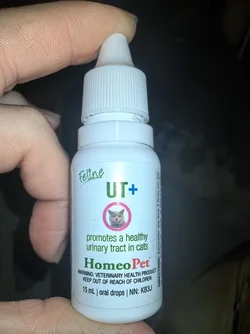
The picture you posted is of a urinary treatment for cats but now you are saying you have a human medication. That is not what you have put a picture of

I cannot tell you what you can or cannot use.
We can only ever give general advice
 
Piggies eat and poop all the time but it takes a day or so for the food to be processed and come out the other end. So the poops you see today are from the food eaten yesterday. The poops you see tomorrow are from food eaten today. Everything is a day behind but you will still see poop every single day. If you aren’t seeing good poops every day then it means she isn’t eating enough. Small poops means not enough food is being consumed.

If she loses more than 50g in a day then that is of concern.

Glucosamine is a dietary suppplement in the uk.
Glucosamine can be helpful in joint or bladder issues.

The picture you posted is of a urinary treatment for cats but now you are saying you have a human medication. That is not what you have put a picture of

I cannot tell you what you can or cannot use.
We can only ever give general advice
Please help me check which of these two glucosamine products is suitable for me? In addition, the veterinarian said that if my pig still has a wet bottom after using the antibiotic he gave me, it means the situation has not improved.Then she really has no other way, really no other way, sigh, I don’t know what to do, but there is something to be happy about, his weight has now recovered to 920 grams,I adhere to your manual feeding method every day. I previously thought that the smell of urine was very sour and was a very serious problem, but it is normal. However, I think that her wet butt is very serious. The medicine I have purchased in this period can save 100 little pigs. I can even open a pharmacy, but I just don't know how to help my piglet. It's been a month since I came back, and I've already spent 20,000 yuan on him. I'm exhausted because I can't find a professional guinea pig doctor. All the doctors I have met also want me to read the things in our forum before they answer me. I can use it, I can use it, and I can be 100% sure that they have too little knowledge, and they don't even understand that the pig's intestine is the same as the rabbit's..Do you know? I even researched suitable probiotics for guinea pigs using artificial intelligence at home. I found that there is a probiotic called Clostridium butyricum in China, which is very suitable for Lactobacillus acidophilus in guinea pigs. It has a pH value of 5-6 in guinea pigs.
 

Attachments

  • mmexport1760461916254.webp
    mmexport1760461916254.webp
    23.1 KB · Views: 2
  • mmexport1760462058767.webp
    mmexport1760462058767.webp
    20.8 KB · Views: 1
Yesterday, I saw some mud in his stool, and the color of the stool was a bit grayish. It's not completely white, I don't know if it's the effect of the medicine I'm taking, I'll send you the English name of the medicine, it has the effect of removing stones, especially in the fallopian tube, I hope it can help you.
【Pharmacology and Toxicology】
In repeated-dose toxicity studies, rats received oral administration of total flavonoids from Pueraria lobata at doses of 200, 600, and 1800 mg/kg/day for 26 consecutive weeks. At the 1800 mg/kg/day dose (approximately 14.5 times the recommended human clinical dose of 1.2 g/day based on body surface area), elevated serum aspartate aminotransferase levels were observed in rats, which recovered one month after discontinuation of the drug. Beagle dogs administered total flavonoids from Pachyrhizus erosus orally at 100, 300, and 900 mg/kg/day for 26 consecutive weeks exhibited reduced appetite and slowed weight gain at the 900 mg/kg/day dose (approximately 25 times the recommended human clinical dose of 1.2 g/day when adjusted for body surface area). elevated serum aspartate aminotransferase, total bilirubin, and blood urea nitrogen levels, which normalised one month after discontinuation.
 

Attachments

  • mmexport1760462291071.webp
    mmexport1760462291071.webp
    14.5 KB · Views: 1
I’m very confused - why are you giving medicine to remove stones in a fallopian tube?

If you mean bladder stones, then there is no medicine that will ever remove or break down stones. Any bladder stones have to come out via surgery.

The reason for a wet bottom is either sitting in urine or dribbling urine out rather than peeing properly. Dribbling out can be because of a bacterial infection, a sludge or stones causing pain and blockage/inability to fully empty
 
I should add that his urine sometimes has a very pungent, sour odour, at other times an alkaline smell, and occasionally no smell at all. Another issue is his water intake: I've noticed that whenever I add electrolyte solution to his water (as the one I bought is very sweet), he drinks copious amounts. Yet if I give him plain purified water, he drinks very little indeed. His urine output strikes me as somewhat abnormal. I'll send you photographs.Please disregard the white marks on the sheets; they were caused by staining when I soaked them in disinfectant.
 

Attachments

  • IMG_20251015_021548.webp
    IMG_20251015_021548.webp
    51.2 KB · Views: 1
  • IMG_20251015_021542.webp
    IMG_20251015_021542.webp
    45.4 KB · Views: 1
  • IMG_20251015_021520.webp
    IMG_20251015_021520.webp
    36.8 KB · Views: 1
  • IMG_20251015_021501.webp
    IMG_20251015_021501.webp
    35 KB · Views: 1
  • IMG_20251015_024248.webp
    IMG_20251015_024248.webp
    54.1 KB · Views: 1
I’m very confused - why are you giving medicine to remove stones in a fallopian tube?

If you mean bladder stones, then there is no medicine that will ever remove or break down stones. Any bladder stones have to come out via surgery.

The reason for a wet bottom is either sitting in urine or dribbling urine out rather than peeing properly. Dribbling out can be because of a bacterial infection, a sludge or stones causing pain and blockage/inability to fully empty
Because I also seriously suspect that he has mud. But the veterinarian said
 

Attachments

  • Screenshot_20251014_225513_com.tencent.mm.webp
    Screenshot_20251014_225513_com.tencent.mm.webp
    20.1 KB · Views: 1
  • Screenshot_20251014_225527_com.tencent.mm.webp
    Screenshot_20251014_225527_com.tencent.mm.webp
    13.2 KB · Views: 0
I’m very confused - why are you giving medicine to remove stones in a fallopian tube?

If you mean bladder stones, then there is no medicine that will ever remove or break down stones. Any bladder stones have to come out via surgery.

The reason for a wet bottom is either sitting in urine or dribbling urine out rather than peeing properly. Dribbling out can be because of a bacterial infection, a sludge or stones causing pain and blockage/inability to fully emptyIt is this function for humans, but I will send you the research report on it,

Urinary tract stones represent one of the most common conditions in urology, with a prevalence rate of 1% to 5% in China. Calcium oxalate stones constitute the most prevalent type, accounting for 70% to 80% of all urinary calculi. Despite significant therapeutic advances such as ureteroscopy lithotripsy and extracorporeal shock wave lithotripsy, the incidence and recurrence rates of calcium oxalate stones remain persistently high. Studies indicate that the five-year recurrence rate for renal calcium oxalate stones is approximately 50%, making prevention a key focus in urological practice. Studies indicate that the five-year recurrence rate for renal calcium oxalate stones is approximately 50%. Consequently, preventing the formation of renal calcium oxalate stones remains a key focus in urology. Inflammatory responses play a significant role in the formation of renal calcium oxalate crystals. Calcium oxalate crystals stimulate increased expression of monocyte chemoattractant protein-1 (MCP-1) in renal tubular epithelial cells, chemotaxing monocytes/macrophages into renal tissue. Macrophage polarisation further promotes crystal adhesion and aggregation through mechanisms including renal tissue inflammation, phagocytosis, and enhanced oxidative stress damage. Thus, regulating macrophage polarisation emerges as a key therapeutic target for inhibiting renal calcium oxalate crystal formation and crystal-induced renal injury. The plant genus Pueraria (Fabaceae) has been extensively studied for its diuretic, lithotriptic, and stone-expelling properties, finding widespread application in urological calculi, urinary tract infections, and cholelithiasis. Total flavonoids from Desmodium styracifolium (TFDS), as its active extract, have been demonstrated to effectively promote ureteral stone expulsion with high safety. However, its role in urinary stone formation remains unclear. The research team previously confirmed that Rictor, an RPTOR-independen
 
So the fact you said fallopian tube (which is nothing to do with the bladder) was just a translation error then - you did mean bladder stone.

I am well aware how common bladder stones are and their formation, the link to diet and genetics.

You have already said that your piggy has sludge and crystals (what you refer to as mud).
I have told you that crystals can form into stones.
I have also told you that the sludge has to come out with a bladder flush if there is a lot and if it is tightly packed. There is no medication to break down stones, they have to come out via surgery.
You have said your vet can’t do a flush. There is not much more we can suggest in your vet can’t do it.
Your piggy is going to continue to have issues if the sludge remains inside and the crystals form into stones
 
Hello, regarding the dampness on her hindquarters, I have recently noticed she frequently sits in urine. Occasionally she moves herself away. Why does she sit in urine so often? Have you seen photographs of her urinating? Is her urine output still normal? Concerning electrolyte levels, I observe she appears extremely thirsty each time she is given electrolyte solution. This makes me suspect she may have an electrolyte deficiency (which I hadn't previously noticed). While I cannot accurately assess her hydration status, I recall that after previous fluid infusions, her hindquarters were no longer damp. Could this dampness be related to electrolyte imbalance? Additionally, my research indicates that ovarian cysts may also cause dampness symptoms – not only on her hindquarters, but her abdominal area remains persistently moist.
 
Hello, regarding the dampness on her hindquarters, I have recently noticed she frequently sits in urine. Occasionally she moves herself away. Why does she sit in urine so often? Have you seen photographs of her urinating? Is her urine output still normal? Concerning electrolyte levels, I observe she appears extremely thirsty each time she is given electrolyte solution. This makes me suspect she may have an electrolyte deficiency (which I hadn't previously noticed). While I cannot accurately assess her hydration status, I recall that after previous fluid infusions, her hindquarters were no longer damp. Could this dampness be related to electrolyte imbalance? Additionally, my research indicates that ovarian cysts may also cause dampness symptoms – not only on her hindquarters, but her abdominal area remains persistently moist.
I would like to ask you a question, the acidity or alkalinity of guinea pig urine should be acidic or alkaline, I recently saw that the veterinarian gave him PH6, before she was between 8.0- 8.5.
 
I had previously sought advice regarding a bladder irrigation procedure, suspecting significant stone deposits within his system. However, the veterinary surgeon indicated that such deposits would only appear on X-rays when present in extremely large quantities. (Subtext: Minor deposits may not show on X-rays, though I remain sceptical), as I compared X-rays showing stone deposits with his imaging records, which appeared quite similar—though I cannot be entirely certain. The vet emphasised that bladder irrigation is only necessary when crystal concentrations are extremely high. He mentioned that while the procedure is feasible, it requires prior confirmation of stone debris within the body. I'm endeavouring to ascertain whether X-ray examination suffices for detecting such debris—only by pinpointing the root cause can we address it. For I've just discovered he's crying again, yet only found a few perfectly formed droppings, with no sign of urine being passed.
 
Sitting in urine can be a multitude of reasons - reluctance to move due to being in pain being one. Impossible for me to know the reason in her case.
All I can say is if she is damp on her belly and bottom then I would be very concerned.

It is absolutely impossible for me to tell anything about her urine output from a few photos. I can’t know if she urinating properly from photos.

Guinea pig urine is alkaline.

Impossible for me to know if she has an electrolyte imbalance. I’m not a vet.
What I can say is that we would only say to give electrolytes if your piggy has diarrhoea and is dehydrated. You have never said that this is an issue so I’m not sure why you are giving her electrolytes.
Adding anything to drinking water to affect their water consumption (it can make them drink more or drink less).
Does the electrolyte powder you are adding have a nice flavour to it? If so then if it tastes sweet, for example, then you might be causing her to drink more for no real reason.

You said in an earlier post that your piggy had already been diagnosed with sludge and that the bladder was half filled with sludge.
A half filled bladder would warrant a flush.
Really confused as to why you are still trying I determine it when I thought you already had a diagnosis.

Crystals can turn into stones and stones can usually be seen on the x ray.

The root cause of stones is either something wrong in the diet (you may need to look at her diet) or a genetic problem with the way she processes calcium (this is nothing you can fix).
If stones are diagnosed then you can’t fix the root cause and then address the stones.
First the Stones have to come out by surgery.
Then you have to hope no more come back.
 
I've just brought him back from the hospital. The vet took an X-ray and explicitly told me there was no sediment in his bladder; a small amount of crystals is perfectly normal. stating he showed no abnormalities. He did indeed have cystitis previously, though neither urine nor faeces were examined. The vet explicitly explained that guinea pigs mostly suffer from sterile cystitis rather than bacterial infections. This explains why our previous urine tests showed only red blood cells, not white blood cells. The reason for recurrence is the bladder protectant I was using – as products on the market are all for cats, not guinea pigs. This protectant alters his alkaline urine to acidic urine. The vet advised me to discontinue all feline bladder protectants and simply purchase human-use test strips. Ultimately, this matched Wiebke's method exactly. The vet confirmed that her initial bleeding stemmed from cystitis, specifically the non-bacterial variety. Hence, despite exhausting every hospital and undergoing virtually every test available, the cause of her bleeding remained elusive—it ultimately traced back to guinea pig cystitis, predominantly non-bacterial in nature. Regarding the ovarian cysts, the vet mentioned that hair loss on both sides is typical. Examining her flank fur revealed no obvious signs, so I concluded that as long as I monitor her urine for blood at home, if there's no blood but she remains in significant pain and distress, coupled with severe hair loss on both sides, then an ultrasound is needed to check the cyst size. Otherwise, spaying or microchipping would be straightforward solutions. Goodness, I never imagined spending so much money only to discover it was intermittent cystitis. Still, I'm finally relieved this time—at least we know what's causing it. As for him still frequently biting the fur on both sides, that's most likely due to hormonal reasons. I reckon once we get the microchip implanted, that issue should resolve itself.
 
It’s good you now have a definitive diagnosis of sterile IC and ovarian cysts.
You had mentioned the presence of bacteria, sludge and stones many times so it was getting confusing as to what was the actual issue.

I have once again added the guide which explains treatment of sterile cystitis as it is a long term condition.
Glucosamine for cats is frequently used as a treatment for sterile cystitis. It is the one you will find commonly mentioned and used on the forum. There is not one specifically for guinea pigs.
You will need to find what works and is available for you.

Wiebke's Guide to Pees and Stones

And yes Hair loss on the sides is a typical symptom of ovarian cysts. Biting at the sides can be indicative of pain due to the cyst. It’s something to monitor.

I hope she will now be ok with the appropriate treatments
 
I just gave him another urine test. This time, there were no red blood cells or white blood cells in the urine, only pathogenic microorganisms were shown as cocci, but this time there was only one plus sign, and there were still a small number of white blood cells and pathogenic microorganisms cocci in his urine test on September 25, which proved that the antibiotics were used correctly. At present, I still plan to give him another week of trial. In fact, I think urine testing is very important for both sterile and non-sterile cystitis, especially this urine analysis. This might be more accurate than test paper. This time, its uric acid alkalinity PH value is 9, and this medicine is really useful when taken continuously. I remember that two weeks ago, his weight reached 870, and I told you that you said the weight loss was 50g, which made me worried. I still want to give him a bladder protector, but I can only cross the river by feeling the stones, so I gave her this.
 

Attachments

  • Screenshot_20251016_011318_com.sankuai.meituan.webp
    Screenshot_20251016_011318_com.sankuai.meituan.webp
    6.5 KB · Views: 1
It’s good you now have a definitive diagnosis of sterile IC and ovarian cysts.
You had mentioned the presence of bacteria, sludge and stones many times so it was getting confusing as to what was the actual issue.

I have once again added the guide which explains treatment of sterile cystitis as it is a long term condition.
Glucosamine for cats is frequently used as a treatment for sterile cystitis. It is the one you will find commonly mentioned and used on the forum. There is not one specifically for guinea pigs.
You will need to find what works and is available for you.

Wiebke's Guide to Pees and Stones

And yes Hair loss on the sides is a typical symptom of ovarian cysts. Biting at the sides can be indicative of pain due to the cyst. It’s something to monitor.

I hope she will now be ok with the appropriate treatments
Yes, yes, after such twists and turns, because his urine analysis indeed had a small amount of white blood cells, However, the white blood cells did not reach the standard of the red line. In the eyes of most veterinarians, white blood cells represent inflammation, and red blood cells represent hematuria. However, whether it is white blood cells or red blood cells, they also have a standard. If it exceeds the red line, it will be judged as inflammation or hematuria. The test result of the piglet is that it has not crossed the red line, but it has pathogenic microorganisms and shows cocci, so this is also the reason why I have not given up, because in the eyes of most veterinarians, my piglet does not count as sick and does not need any medication. But I did see that he was in pain and uncomfortable, and if I didn't give him medication, I believe his liver and kidneys must already be damaged, because the last time he urinated, he urinated out tube-shaped particles, This means that the kidneys already have problems, but I don't know if it's bladder inflammation, ovarian problems, or other reasons that make him feel so uncomfortable. Enrofloxacin is not very effective for him. Fortunately, the doctor gave me a microscope and a test strip.Because his report now shows no white blood cells or red blood cells, so-called inflammation, but his urine analysis does show that he has a coccus infection, through my study in this period of time, this is the obvious characteristic of sterile cystitis, right?😂
 

Attachments

  • mmexport1760460081219.webp
    mmexport1760460081219.webp
    29.1 KB · Views: 2
Remember none of us are vets.
The majority of us will never have a need to test our piggies urine ourselves - our vets will handle everything for us.
 
It’s good you now have a definitive diagnosis of sterile IC and ovarian cysts.
You had mentioned the presence of bacteria, sludge and stones many times so it was getting confusing as to what was the actual issue.

I have once again added the guide which explains treatment of sterile cystitis as it is a long term condition.
Glucosamine for cats is frequently used as a treatment for sterile cystitis. It is the one you will find commonly mentioned and used on the forum. There is not one specifically for guinea pigs.
You will need to find what works and is available for you.

Wiebke's Guide to Pees and Stones

And yes Hair loss on the sides is a typical symptom of ovarian cysts. Biting at the sides can be indicative of pain due to the cyst. It’s something to monitor.

I hope she will now be ok with the appropriate treatments
Now that I recall this experience, it is enough to prove that most doctors simply do not know about the aseptic cystitis of guinea pigs, so many guinea pigs eventually sacrificed their lives on this. Now I'm pretty sure she's aseptic cystitis, as for ovarian cysts, you're right, it's just a manifestation of inflammation, inflammation once the disease is cured, there is any abnormality, but please understand For a novice, in this medical situation, Really, I did my best. For the first time, he had bleeding from sterile cystitis, and the hospital couldn't find the cause of the bleeding. At that time, his abdomen was very beautiful, without any signs of inflammation or effusion. As a result, the time was wasted, and then a B ultrasound was done. There was effusion in her uterus. The endometrium of the ovary has also thickened, and her weight has decreased. Even so, the hospital does not give her medicine because they are convinced that her white blood cells have not crossed the red line, and although her red blood cells have crossed the red line, there is no obvious ovarian cyst in her body. So if it weren't for your help here and my insistence on giving him antibiotics and painkillers, I believe she wouldn't have made it this far, and he fell out of bed two days ago and his bones are still fine.
It’s good you now have a definitive diagnosis of sterile IC and ovarian cysts.
You had mentioned the presence of bacteria, sludge and stones many times so it was getting confusing as to what was the actual issue.

I have once again added the guide which explains treatment of sterile cystitis as it is a long term condition.
Glucosamine for cats is frequently used as a treatment for sterile cystitis. It is the one you will find commonly mentioned and used on the forum. There is not one specifically for guinea pigs.
You will need to find what works and is available for you.

Wiebke's Guide to Pees and Stones

And yes Hair loss on the sides is a typical symptom of ovarian cysts. Biting at the sides can be indicative of pain due to the cyst. It’s something to monitor.

I hope she will now be ok with the appropriate treatments
Looking back on this experience now, it serves as proof that most veterinarians are fundamentally unaware of aseptic cystitis in guinea pigs. They have indeed never heard of aseptic cystitis, let alone its aseptic variant. They are equally ignorant of interstitial cystitis, leading to many guinea pigs ultimately succumbing to this condition. I am convinced she suffered from pyelonephritis at the time. As for the bilateral fur-chewing behaviour, I still require further observation. Should the ovarian and uterine fluid accumulation resolve once the bacterial infection subsides, it may indicate her ovaries were never abnormal—all symptoms stemming from bladder issues. If so, everything becomes perfectly clear. Throughout this journey, I did indeed assume the role of a doctor, as veterinarians seldom delve into such complexities. These were the daily puzzles I pondered at home, crucial to saving her life. But please understand: facing such a complex condition, as a novice, I gave it my utmost effort. During the initial episode, the pyelonephritis triggered haemorrhaging, yet the hospital failed to identify the cause. At that time, abdominal examinations revealed no abnormalities—no signs of inflammation or fluid accumulation—resulting in precious time being squandered. Subsequent ultrasound revealed only uterine fluid, thickened ovarian endometrium, and weight loss. Despite this, the hospital refused medication, insisting her white blood cell count hadn't reached critical levels. Though her red blood cell count was elevated, the cause remained undiagnosed. Had you not intervened promptly to support me, and had I not resolved to administer antibiotics and pain relief, I believe she wouldn't have survived to this day. More worryingly, she fell from her bed two days ago, yet no fractures were detected. I often half-jokingly tell my mother: caring for guinea pigs is more demanding than tending to the ancestors (here, "ancestors" is used adjectivally).
 
The veterinarian also told me to continue taking the anti-inflammatory medicine.
Let me continue to take the anti-inflammatory medicine. It was my veterinarian who did the urine test. I just took him to have three X-rays this afternoon. It was a veterinarian from another hospital who told me that he didn't need to take any anti-inflammatory medicine.I was just reflecting again and reiterated his urine analysis on September 25th. The doctor just told me to go to that hospital and use that machine to do another urine analysis to know if enrofloxacin is effective for him. I just gave him antibiotics again. The reason given to him was to listen to the doctor who did the urine test.
 
Back
Top